
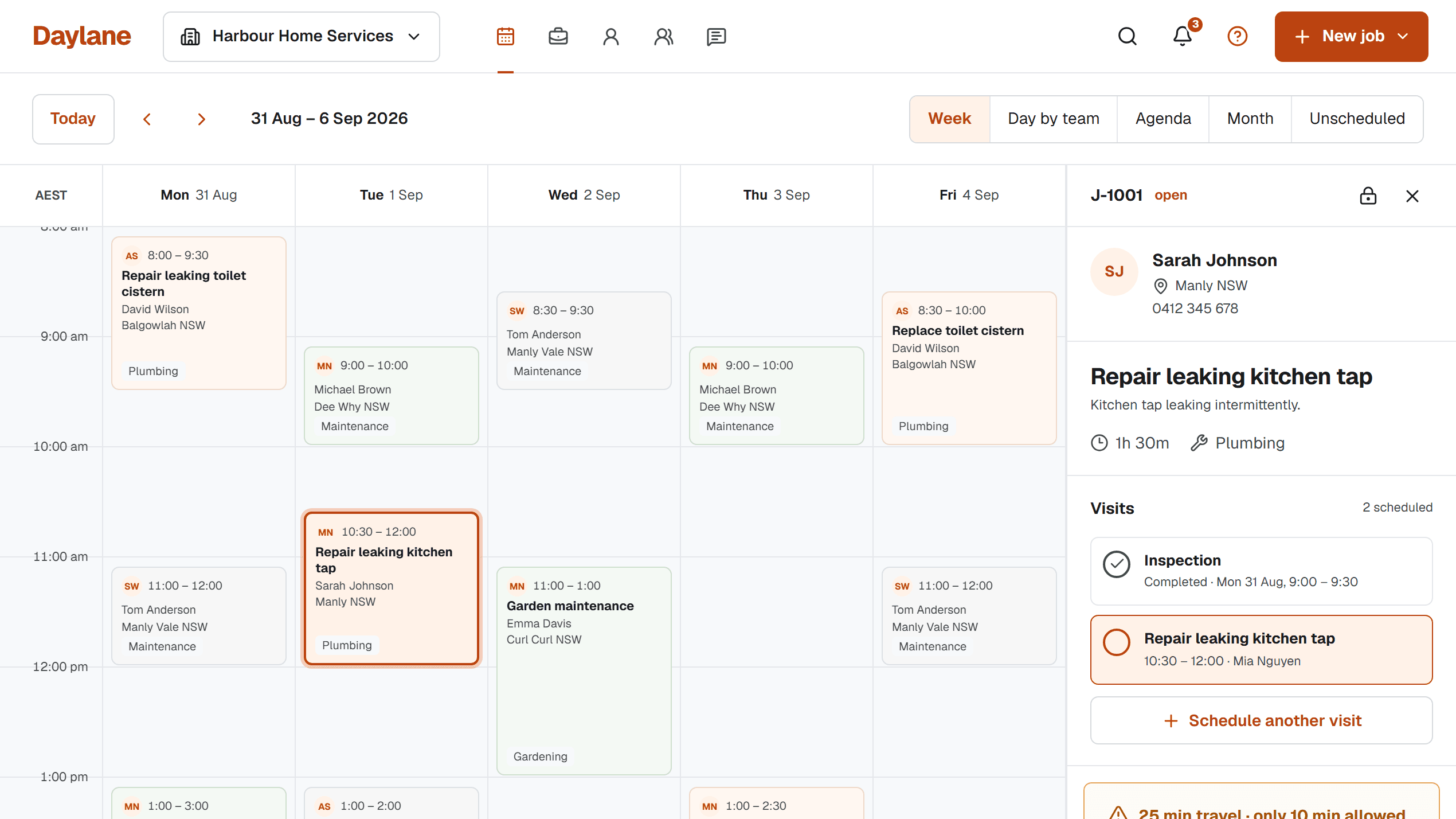
Tell the customer as soon as the agreed arrival window is at risk. Name the affected Visit, give a realistic revised estimate and offer a way to respond. If you do not know when you can arrive, promise the next update rather than inventing a precise time you may miss again.
Recheck the day before sending a new promise
A late departure changes the journey and may affect more than one customer. Look at the remaining work and travel before offering a revised window. Sending a reassuring but untested estimate can turn one delay into several broken commitments.
Keep the explanation brief and factual. You do not need to share another customer's details or describe a complicated repair to explain that the preceding Visit is taking longer than planned.
Use a concrete message when the estimate is clear
Example: 'Hi Taylor, it is Alex from your service team. Today's Visit is running behind schedule. I now expect to arrive between 1:30 and 2 pm, instead of 1 pm. I am sorry for the change. Does that still work for access, or would you prefer that we arrange another time?'
Replace the names, times and service details before sending. Daylane offers Visit confirmation and time-update SMS on paid Pro+, including 50 SMS per Business each month. These templates are suggested wording for an individual service update; use the contact channel already agreed with the customer.
Give a review time when arrival is uncertain
Example: 'I cannot yet give you a reliable arrival time for today's Visit. I will contact you again by 12:30 with an update. If your access arrangements have changed, please let me know so we can agree the next step.'
A review time is useful only if someone owns it. Add the follow-up to your working process and contact the customer even if the estimate remains uncertain. Silence leaves them planning around the original booking.
Record the response and update affected Visits
If the revised time no longer suits, arrange another option and update the existing Visit. Do not mark the customer as unavailable when the change originated with your schedule. A factual reason helps you review recurring causes later.
Check the next customer too. At day's end, compare the original service estimate with what happened: longer scope, access delay or travel. Change the relevant scheduling allowance for future work rather than repeatedly relying on apology messages.
Sources and scope
An original operational guide from the Daylane team at Blu Mint Digital. Scenarios, durations and message wording are illustrative planning examples, not customer results or industry benchmarks. Product references were checked against the Daylane implementation on 5 September 2026. Adapt the workflow to your service, customer agreements and working conditions.
How we write and maintain our guides. Free templates and planning tools.