
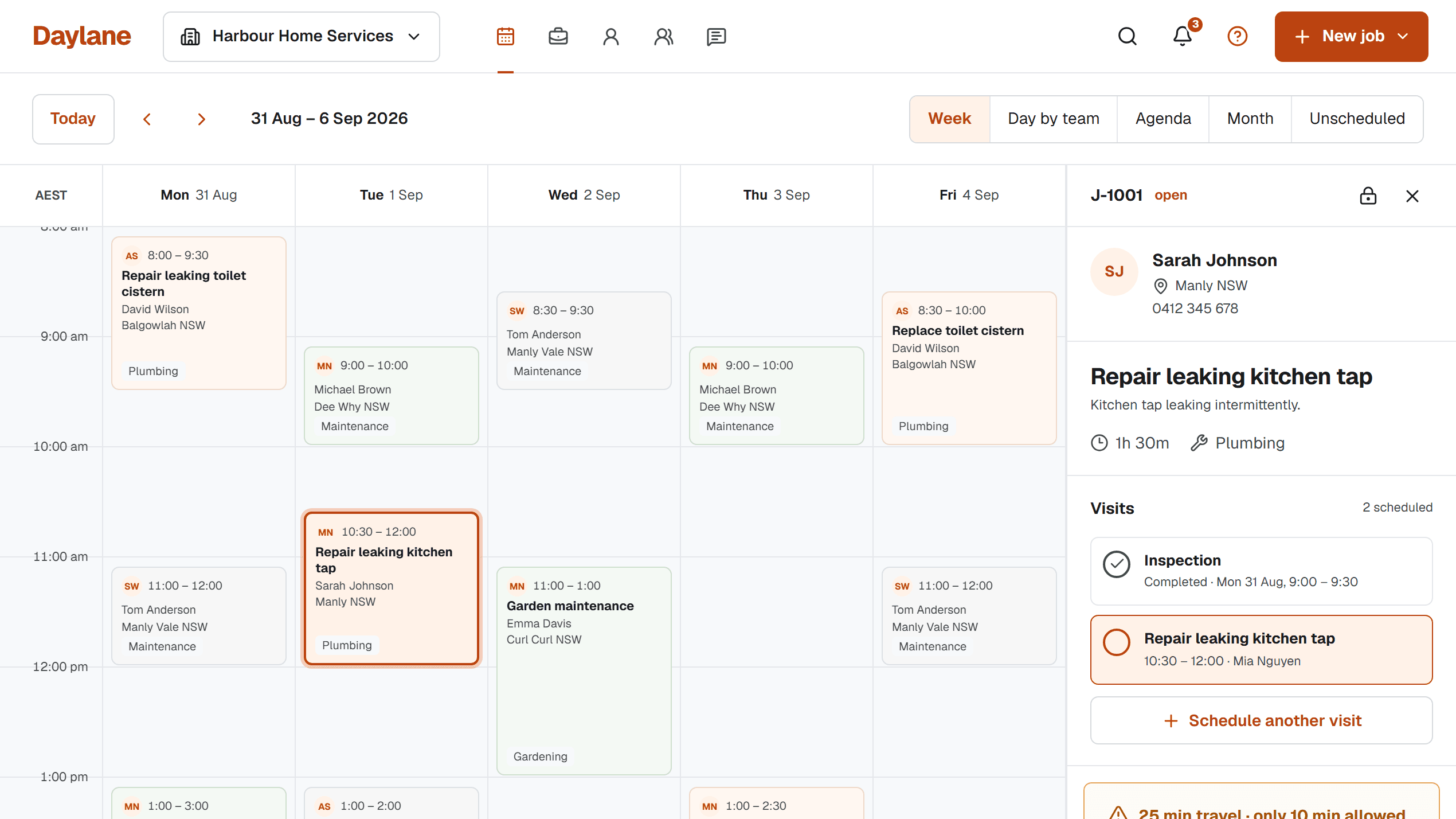
Customers need an easy way to request a different time. The Business needs to protect travel, staff availability and other commitments. A good rescheduling process serves both by keeping the Customer's message attached to the Job and treating it as a request until someone reviews it.
Offer one clear request path
A private Visit page or message link can show the confirmed date, Location and a request action without exposing internal notes. Ask for the preferred alternative and a short reason only if it helps resolve the change. Do not make the Customer repeat information already attached to the Job.
Acknowledge receipt immediately, but distinguish acknowledgement from acceptance. Plain language such as request received; we will confirm the new time avoids the false impression that the calendar has already moved.
Review the whole schedule before accepting
Check the proposed time against working hours, assignee availability, travel and the duration of surrounding Jobs. If it does not fit, offer a realistic alternative rather than squeezing the Visit into a gap that only exists on screen.
For urgent or high-impact changes, record the reason for an override. This supports consistent decisions and makes later schedule reviews more useful.
Send one confirmed update
Once the Business accepts a new time, update the Visit and send a concise confirmation containing the Job, new date or Arrival Window, Location and contact path. If the Customer was previously notified, make the change prominent so the old time is not mistaken for the current one.
Use transactional messages for the schedule change only. The Australian Spam Act distinguishes commercial electronic messages, and ACMA advises businesses to obtain consent, identify the sender and provide an unsubscribe facility where the rules apply. Keeping scheduling messages operational also makes them easier to trust.
Keep the change history
Record the old time, new time, requester, decision and notification outcome. This is not about blaming the Customer. It gives everyone a shared account of what was agreed and helps identify repeated scheduling friction.
A visible history also lets you improve policy with evidence. If late changes concentrate around long Arrival Windows or a particular service, improve that part of the process rather than adding a blanket rule for every Customer.
Sources and scope
This practical guide was checked against the primary sources below on 1 September 2026. It is general information, not legal, tax, safety or accounting advice for your circumstances.
How we write and maintain our guides. Free templates and planning tools.