
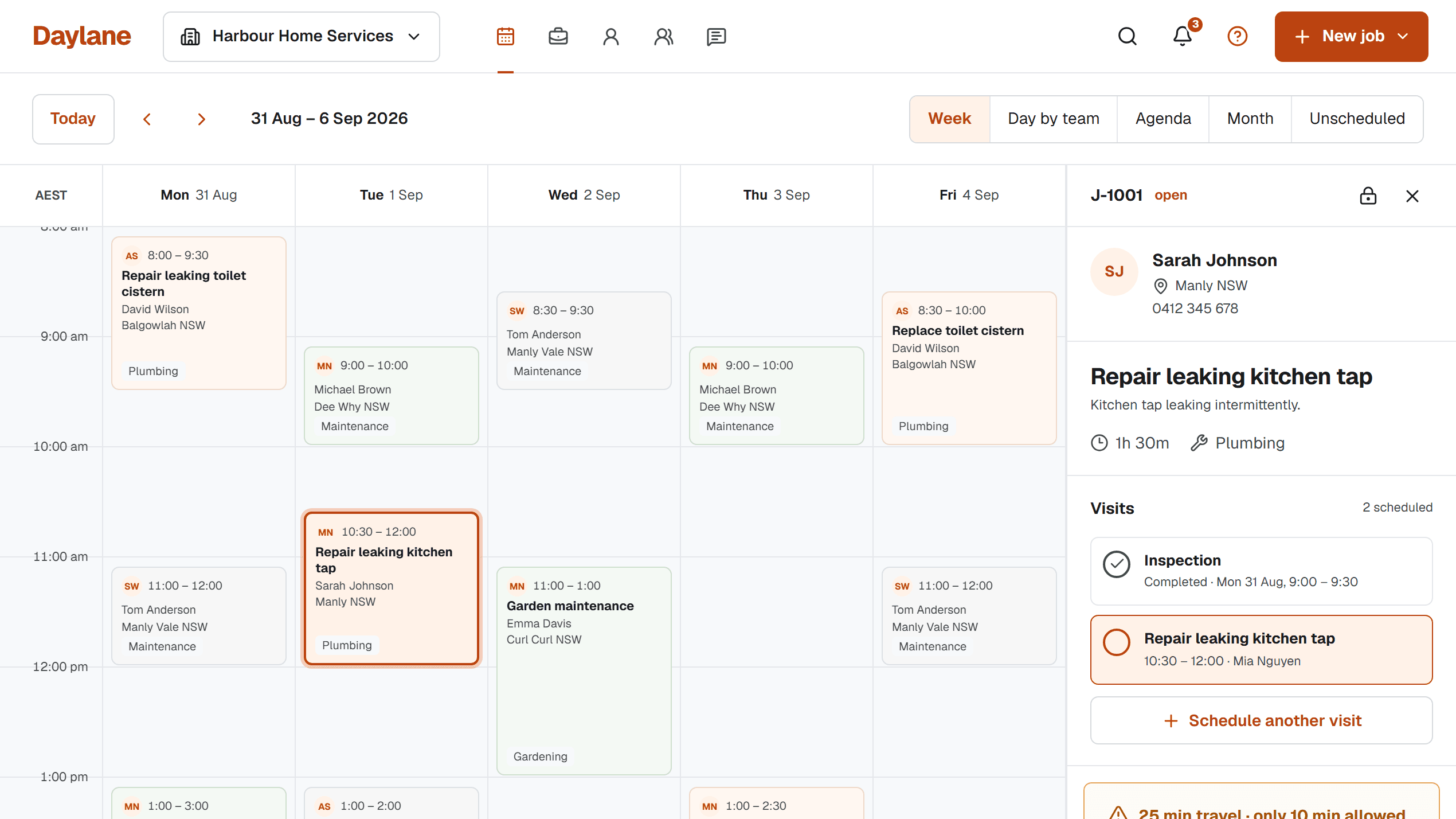
Recurring work should reduce repeated entry, not remove control. The safest pattern is a recurrence that creates separate Jobs and Visits for a limited future window. Each occurrence can then be moved, cancelled, completed or invoiced without rewriting the entire series.
Define what actually repeats
Start with the interval, expected duration, Customer, Location and default instructions. Confirm whether the pattern is weekly, fortnightly, monthly or based on another service cycle. Avoid assuming that every field should copy forever; access instructions and scope can change.
Name the service clearly enough that each generated Job makes sense on its own. Garden maintenance or pool service is more useful than recurring appointment. If the scope varies seasonally, note the baseline and update individual occurrences when needed.
Generate a rolling window
Creating years of future Jobs makes the calendar heavy and increases the chance of stale commitments. A rolling window creates only a manageable number of upcoming occurrences, then adds more as time advances. The Customer still has continuity without pretending that distant dates cannot change.
Choose the window based on how far ahead you genuinely plan. A month may suit a flexible maintenance round; a quarter may suit services that Customers expect to reserve well in advance.
Protect individual exceptions
When one occurrence changes, decide whether you are editing this Visit or future occurrences. Moving a public holiday Visit should not move every future date. Changing the usual weekday from next month should not rewrite the historical record.
The interface should make that choice explicit and preserve completed occurrences. History is evidence of what happened; recurrence settings are instructions for what should happen next.
- This occurrence only
- This and future occurrences
- Cancel one without cancelling the recurrence
- Keep completed occurrences unchanged
- Review open Jobs with no future Visit
Reconfirm the relationship, not every click
Automation should support the Customer relationship. Confirm the ongoing arrangement, explain how schedule changes will be communicated and make cancellation straightforward. Repeated transactional messages should identify the Business and stay focused on the service.
Review recurring Jobs periodically. Check whether the frequency, duration, Location and instructions still match reality. A recurrence is useful only while it represents a real agreement.
Sources and scope
This practical guide was checked against the primary sources below on 1 September 2026. It is general information, not legal, tax, safety or accounting advice for your circumstances.
How we write and maintain our guides. Free templates and planning tools.