
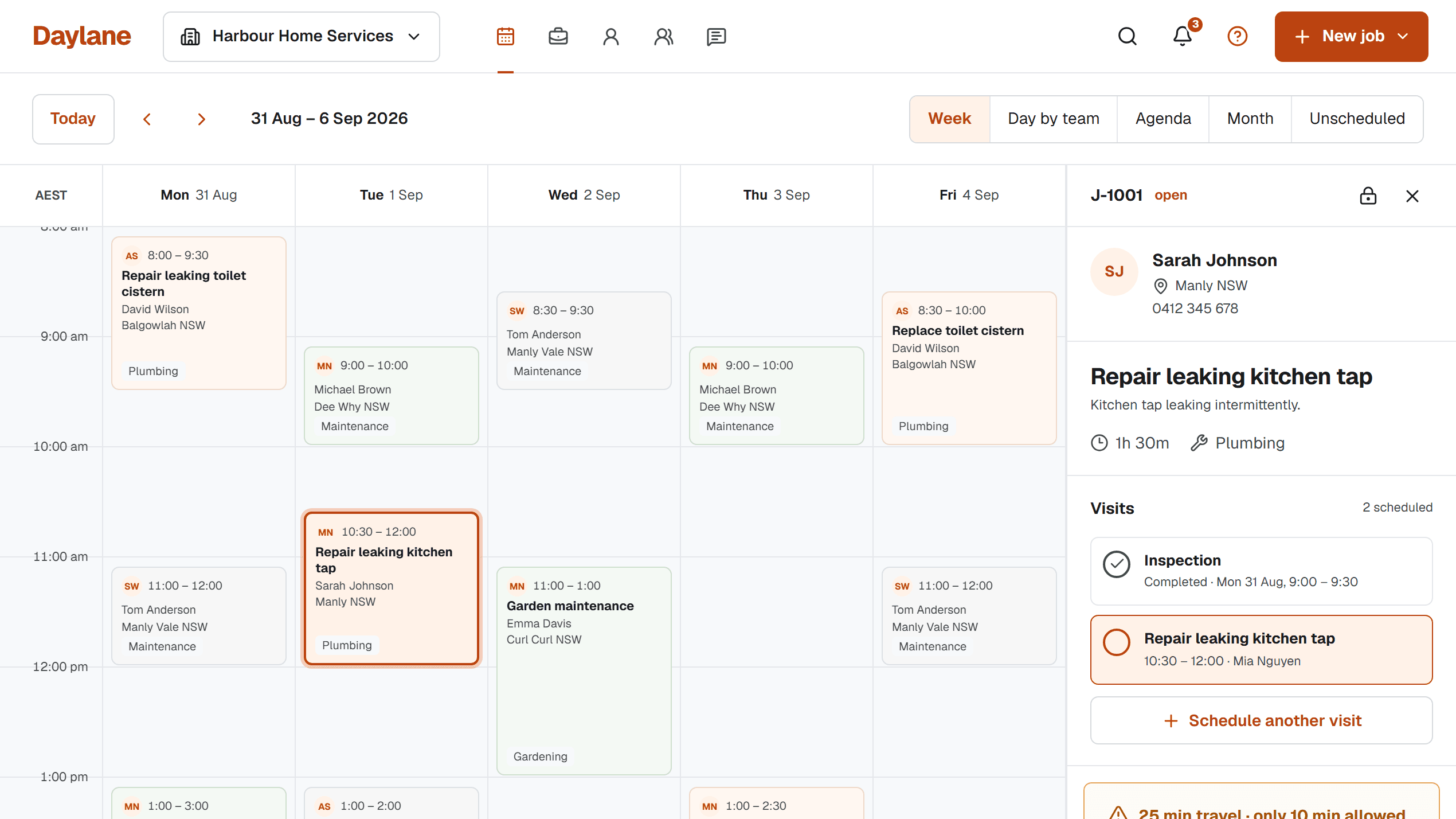
A useful weekly Job schedule is not the one with every minute filled. It is the one you can still follow after a Customer runs late, traffic changes or a return Visit becomes necessary. Good planning makes capacity visible, keeps unconfirmed work out of the committed calendar and leaves enough room to recover when the day changes.
Plan from known capacity
Begin with the hours you genuinely want to work, then subtract fixed commitments, administration and travel. The remainder is your bookable capacity. This is more reliable than adding Jobs until the calendar looks full because it acknowledges that a seven-hour working day rarely contains seven chargeable hours at Customer Locations.
Give each Job an expected duration based on similar work, not the shortest possible outcome. If the work is uncertain, schedule an inspection first or use an Arrival Window that is honest with the Customer. A short planning conversation now is cheaper than moving three later Jobs when the first one runs long.
Keep requested work separate from confirmed Visits
A backlog or unscheduled list is useful because not every enquiry deserves a time immediately. Record the Customer, Location and work first, then place a Visit only after the scope, availability and priority are clear. This preserves the lead without pretending that the calendar is committed.
Review unscheduled work at the same time each day. Decide whether each Job needs a call, a date, more information or a polite close. A list that is reviewed is a queue; a list that is ignored becomes another inbox.
Use buffers deliberately
Travel, parking, collecting materials and writing notes all occupy time. Add a visible buffer where the risk is real rather than applying one arbitrary gap to every Job. Two nearby maintenance Visits may need less space than a cross-city trip before an uncertain repair.
When you override a warning or fit in urgent work, record why. That small note helps you distinguish a conscious exception from an unrealistic default. Over time, the pattern shows which Job types need longer estimates and which areas need more travel allowance.
- Customer access and parking
- Likely travel at that time of day
- Material collection or disposal
- Notes, photos and Customer handover
- A realistic lunch and recovery margin
Close the loop before tomorrow
At the end of the day, mark completed Visits, identify Jobs that need another attendance and move only the affected Visit. Do not close a Job automatically just because today's Visit finished. A repair can be attended, documented and still remain open while a part is ordered.
A ten-minute review turns today's changes into tomorrow's plan. It also keeps completed work ready for your invoicing process and gives Customer updates a clear trigger. The goal is not a perfect week; it is a schedule that stays trustworthy as the week changes.
Sources and scope
This practical guide was checked against the primary sources below on 1 September 2026. It is general information, not legal, tax, safety or accounting advice for your circumstances.
How we write and maintain our guides. Free templates and planning tools.