
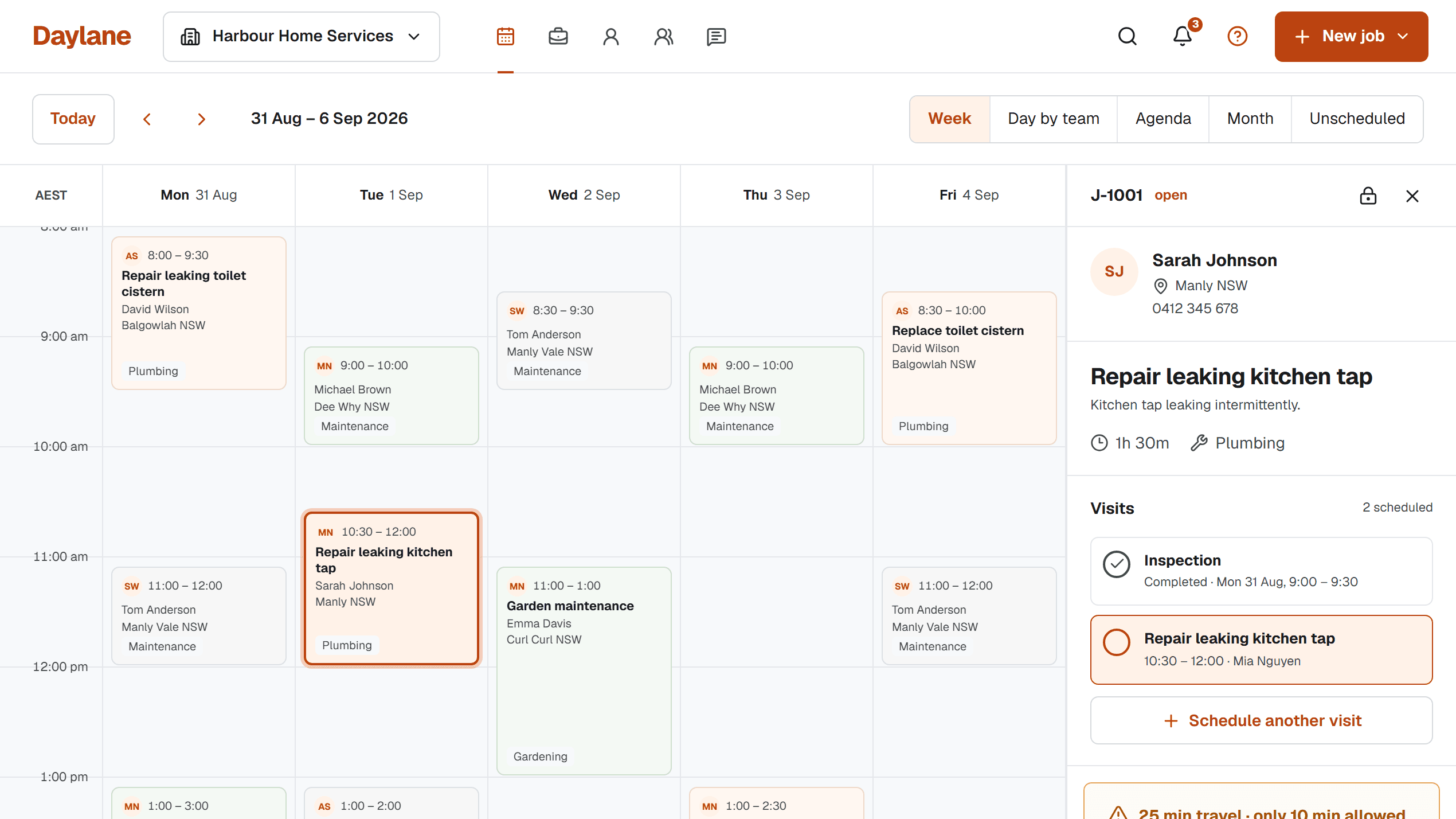
Customers do not need a stream of automated messages. They need to know that the Visit is confirmed, when to expect you, where the work will happen and how to ask for a change. A small communication plan tied to the real Job status is more useful than sending frequent messages that the schedule cannot support.
Confirm the details the Customer can act on
A confirmation should name the Business, Job, date or Arrival Window, service Location and contact path. If access preparation is required, state it plainly. Keep internal scheduling details and private notes out of Customer-facing pages and messages.
Send the confirmation after the Business has accepted the Visit, not when the Customer first submits a request. This keeps the words confirmed and requested meaningful.
Use Arrival Windows honestly
An Arrival Window can reflect the uncertainty of field work better than an exact time. Keep the internal start time for planning while showing the Customer a window you can reasonably meet. A four-hour window is not automatically helpful; size it from the actual travel and Job variability.
If the expected arrival moves outside the window, send an update with the new expectation and a way to respond. Silence is more frustrating than a realistic change.
Make on-the-way updates intentional
An on-the-way message works best as a deliberate action when the worker is genuinely departing. It can identify the Business and provide a simple arrival estimate without sharing live location. Avoid triggering it merely because the calendar time has arrived.
Record whether the message was sent or failed so the team does not assume the Customer was notified. Retry logic should avoid sending the same update twice.
Keep transactional messages transactional
Do not add promotions, referrals or unrelated product advertising to essential schedule updates. Customers are more likely to trust messages that stay focused on the Job they expect. Separate marketing consent and preferences from operational communication.
ACMA publishes guidance on consent, sender identification and unsubscribe requirements for commercial electronic messages. Review that guidance before turning service messages into marketing campaigns or adding promotional SMS.
Sources and scope
This practical guide was checked against the primary sources below on 1 September 2026. It is general information, not legal, tax, safety or accounting advice for your circumstances.
How we write and maintain our guides. Free templates and planning tools.