
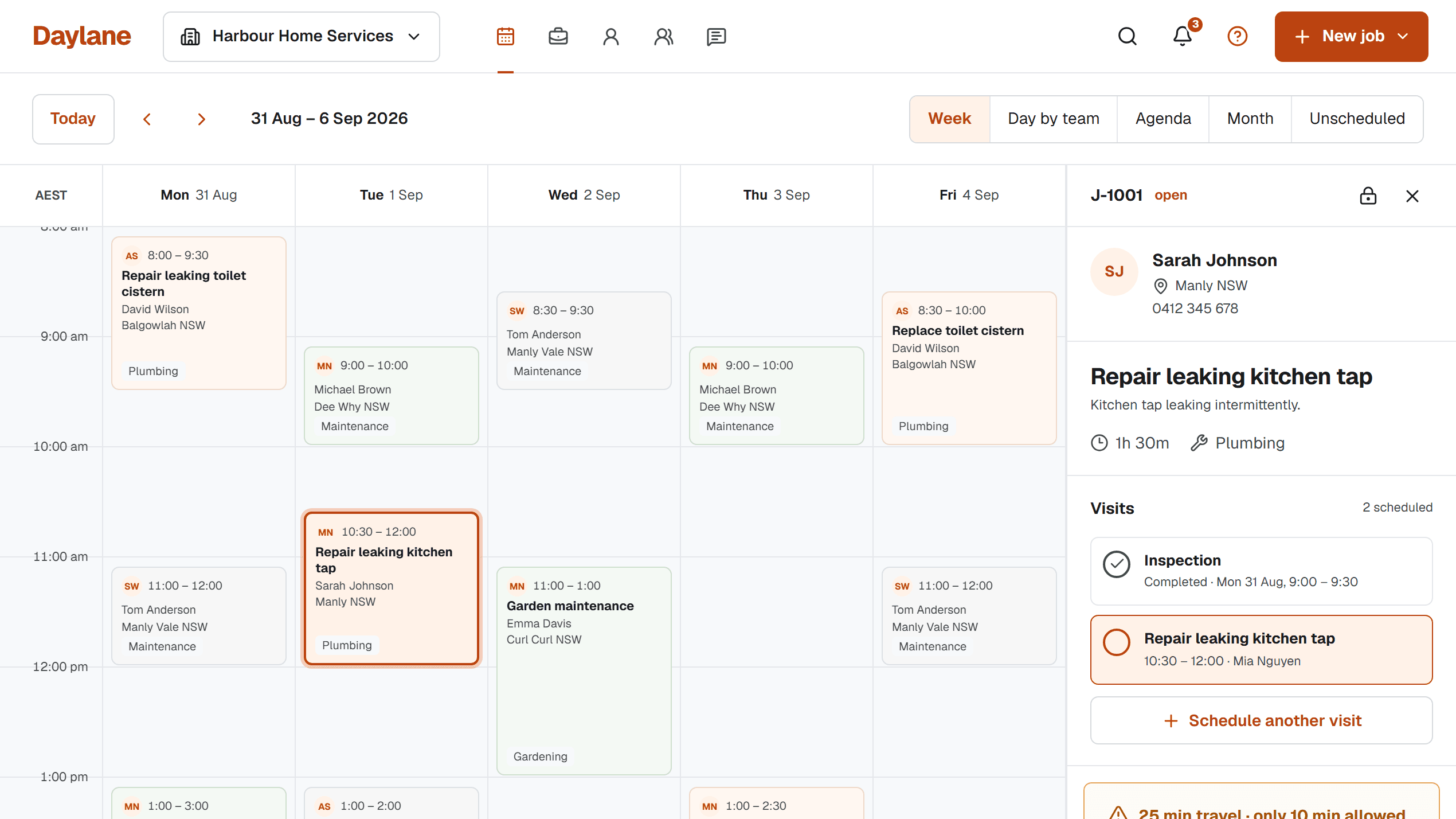
An arrival window tells the customer when you expect to arrive; it is different from the time needed to complete the work. Set the window from the uncertainty before that Visit, keep a workable internal start time, and confirm access within the range you offer. A wider window does not create extra capacity.
Separate arrival from duration
'Arriving between 10 and 11 am' does not mean the work will finish at 11. If the service may occupy another 90 minutes after arrival, make that distinction clear when the customer needs to plan their day.
Internally, reserve the service time and necessary travel. The customer-facing window should describe uncertainty in arrival, while the calendar still protects the time needed to do the work.
Use a window you can explain
Look at the Visits and travel before this one. The first attendance of the day may be easier to time than a repair after two uncertain inspections. Use experience from comparable work to set expectations; there is no universal window that suits every service.
In a fictional example, you plan a 10:30 am start and agree an arrival between 10 and 11. If the preceding Job runs beyond the allowance, the window has been affected even if the service itself is short. Contact the customer before the original window expires.
Check whether the whole window is workable
Ask whether the person providing access can accommodate the proposed range. If they must leave at 10:15, a 10 to 11 window does not solve the access problem. Arrange a different Visit or a clearly agreed access method instead.
- Confirm the date and service Location.
- State the arrival window using local time.
- Explain expected time on site if it affects access.
- Give a contact method for changes.
- Tell the customer when you will update them if delayed.
Keep one current agreement
When the window changes, update the Visit and send the agreed details through your normal service channel. Remove ambiguity about whether an earlier message still applies. Record the customer's response where the scheduling team can find it.
Daylane supports customer Visit information alongside the internal schedule. Check the customer-visible details before sharing a Visit Page so the message, date and Location describe the same attendance.
Sources and scope
An original operational guide from the Daylane team at Blu Mint Digital. Scenarios, durations and message wording are illustrative planning examples, not customer results or industry benchmarks. Product references were checked against the Daylane implementation on 5 September 2026. Adapt the workflow to your service, customer agreements and working conditions.
How we write and maintain our guides. Free templates and planning tools.