
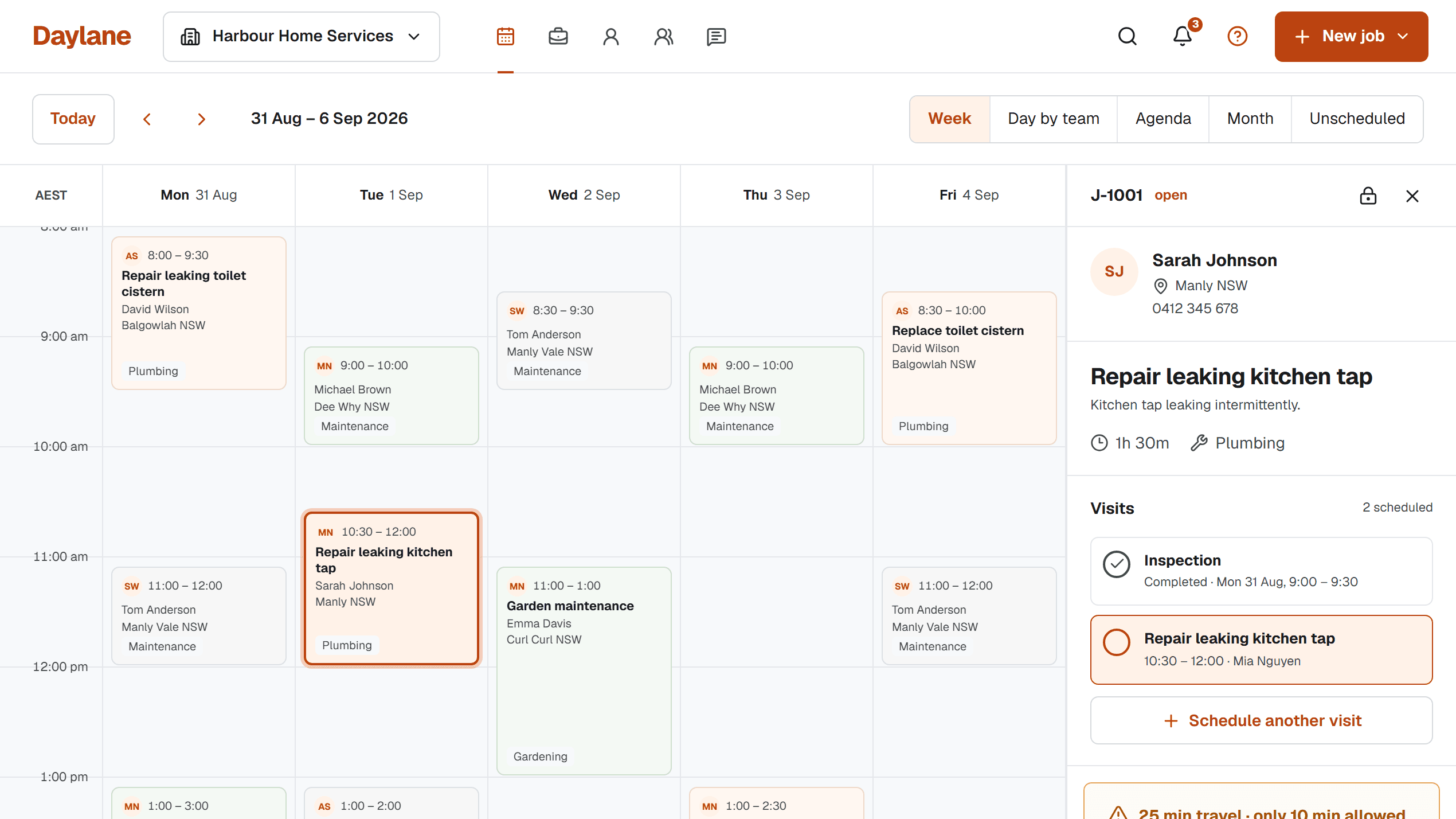
A useful booking confirmation settles the details needed to attend: who, where, what, when and how access will work. It should describe an agreed Visit rather than turn an unanswered request into a commitment. Check the operational record first, then send one clear version of the booking details.
Confirm the work and the correct Location
Name the service or assessment being booked. If the first attendance is an inspection, avoid wording that promises the repair will be completed at that Visit. Different expectations about purpose can cause problems even when everyone agrees on the time.
Check the service address separately from the billing or customer address. Include the unit or suite information required to find the property. A customer managing several sites should not have to infer which one the confirmation refers to.
Make timing and access explicit
Use a full date and an arrival window or agreed time. Relative wording such as 'next Friday' can be misunderstood, especially when a message is read later. Explain expected time on site where that affects the customer's availability.
- Customer or site contact name.
- Purpose of the Visit and agreed scope.
- Service Location, including unit or reception details.
- Date and local arrival time or window.
- Agreed access contact and any preparation already discussed.
- Reply or contact method if the booking needs to change.
Check the message against the calendar
Before sending, verify the assigned person and the surrounding travel. A confirmation should follow a capacity decision, not substitute for one. If the booking is still tentative, state what remains to be agreed and when you will confirm it.
In Daylane, review the Visit details before sending a manual email update or sharing customer-facing Visit information. Pro+ includes automated email reminders, but the record still needs to be correct before an automated message can be useful.
Handle replies as changes to the record
When a customer corrects the address or says the window no longer works, update the Job or Visit and confirm the outcome. Leaving the corrected detail only in an inbox creates a mismatch for the person attending.
A final check the day before can focus on exceptions: changed access, outstanding approval or an unready part. Repeating the entire intake process for every routine Visit adds administration without necessarily improving clarity.
Sources and scope
An original operational guide from the Daylane team at Blu Mint Digital. Scenarios, durations and message wording are illustrative planning examples, not customer results or industry benchmarks. Product references were checked against the Daylane implementation on 5 September 2026. Adapt the workflow to your service, customer agreements and working conditions.
How we write and maintain our guides. Free templates and planning tools.