
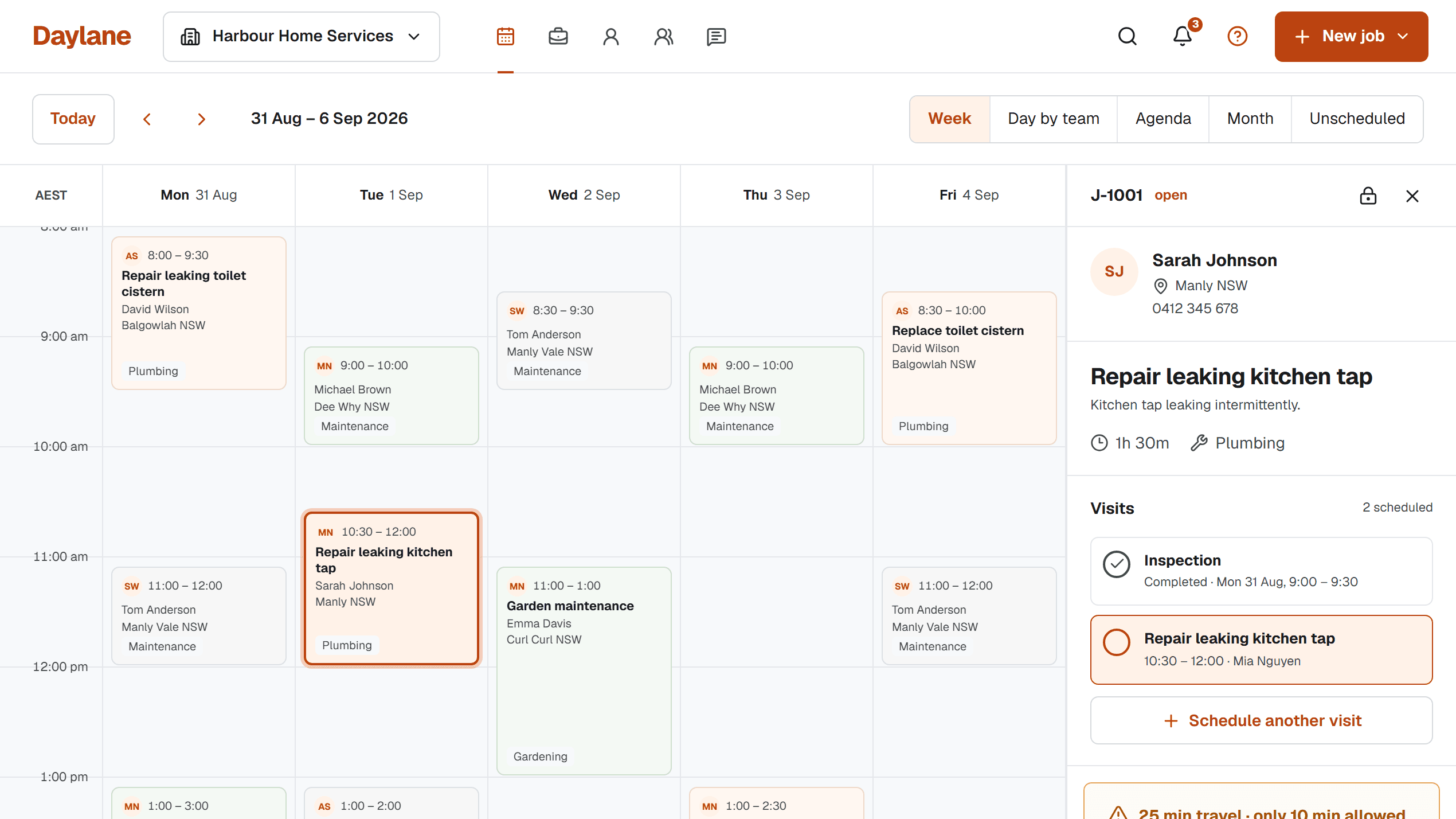
Before accepting a Job request, establish the requested work, service Location, contact, timing constraints and any dependency that affects attendance. Ask enough to make the next decision without collecting an unnecessary personal history. A preferred time is a request until you have checked capacity and agreed the booking.
Capture the request in the customer's terms
Start with what the customer wants attended to and the result they are seeking. Keep reported symptoms separate from your assessment. If the description is unclear, ask one practical follow-up that helps determine whether you can offer a service or an inspection.
Record the service Location and access contact early. Work outside your service area or at a site you cannot access may need a different next step before duration and calendar slots matter.
Ask about constraints, not just preferences
'Tuesday is best' may mean a preference or the only day someone can provide access. Ask which it is. Likewise, a deadline for a property handover may constrain the work differently from a customer simply wanting the earliest available slot.
- What work is requested, and is it within your service scope?
- Where will the Visit take place?
- Who can approve the work and who provides access?
- What dates or access windows are genuinely constrained?
- Are materials, approval or another person's attendance needed first?
- What is the next agreed contact or decision?
Choose the right next step
A complete request can become a confirmed Visit after you check capacity. An uncertain scope may need an assessment. Work awaiting approval belongs in a visible pending list. Declining an unsuitable request clearly is better than creating a placeholder that looks like accepted work.
Daylane's Pro+ Booking Request Page lets customers submit requests for review. Treat that workflow as a request inbox: it does not mean every preferred time is an instantly confirmed self-booking.
Keep the handover short and usable
After the call or request review, another scheduler should be able to identify the Customer, Location, work and next action without reading an entire conversation. Put the useful facts in the Job record and avoid copying unrelated messages.
For example: 'Customer requests an inspection of the reported issue at the service address; access available after 1 pm; call Wednesday with two options.' That note preserves the scheduling constraint and the promise you made, while leaving the attendance unconfirmed until the next step is complete.
Sources and scope
An original operational guide from the Daylane team at Blu Mint Digital. Scenarios, durations and message wording are illustrative planning examples, not customer results or industry benchmarks. Product references were checked against the Daylane implementation on 5 September 2026. Adapt the workflow to your service, customer agreements and working conditions.
How we write and maintain our guides. Free templates and planning tools.