
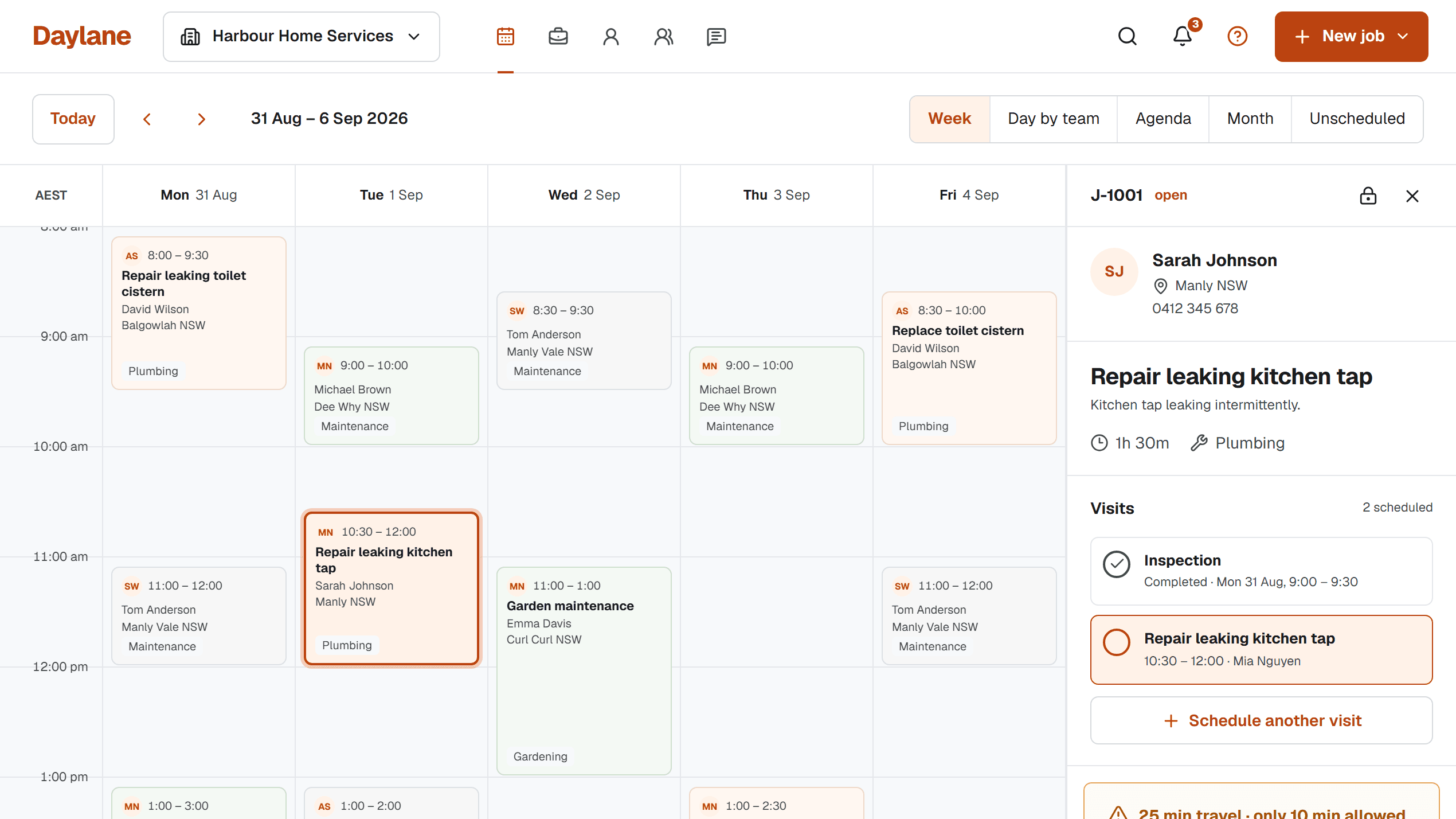
A Visit can be finished while the Job still has agreed work remaining. The Visit records an attendance; the Job represents the broader work and its outcome. Review the remaining scope before closing the Job, especially after an assessment or a parts-dependent return.
Use the scope decision to interpret the status
The examples below distinguish a completed attendance from an unfinished service commitment. They do not set a billing rule; invoicing follows the actual agreement and your separate process.
| Attendance outcome | Visit | Job decision |
|---|---|---|
| Assessment finished; approved work remains | Completed | Keep open and plan the next action |
| First task finished; part needed for the second | Completed | Keep remaining scope visible |
| All agreed work finished; no active Visits remain | Completed | Review and close the Job if appropriate |
Check what the Daylane controls change
Start Visit and Complete Visit update attendance progress. They do not automatically close the Job. Owners and schedulers close Jobs through the Job workflow after reviewing the work.
Daylane's completion action requires active Visits to be resolved first. If it asks you to complete or cancel every Visit, inspect the relevant attendance rather than using Job completion to conceal unfinished scheduling.
Give an open Job a next action
If work remains, decide whether another Visit can be booked now or whether a dependency must be resolved first. Record the blocker, owner and review time. A future placeholder is not necessary to keep the Job open.
If no work remains, check the factual outcome and any customer promise, then close the Job deliberately. Keeping completed work open makes the backlog less useful for finding genuine follow-up.
Sources and scope
An original operational guide from the Daylane team at Blu Mint Digital. Scenarios, durations and message wording are illustrative planning examples, not customer results or industry benchmarks. Product references were checked against the Daylane implementation on 5 September 2026. Adapt the workflow to your service, customer agreements and working conditions.
How we write and maintain our guides. Free templates and planning tools.