
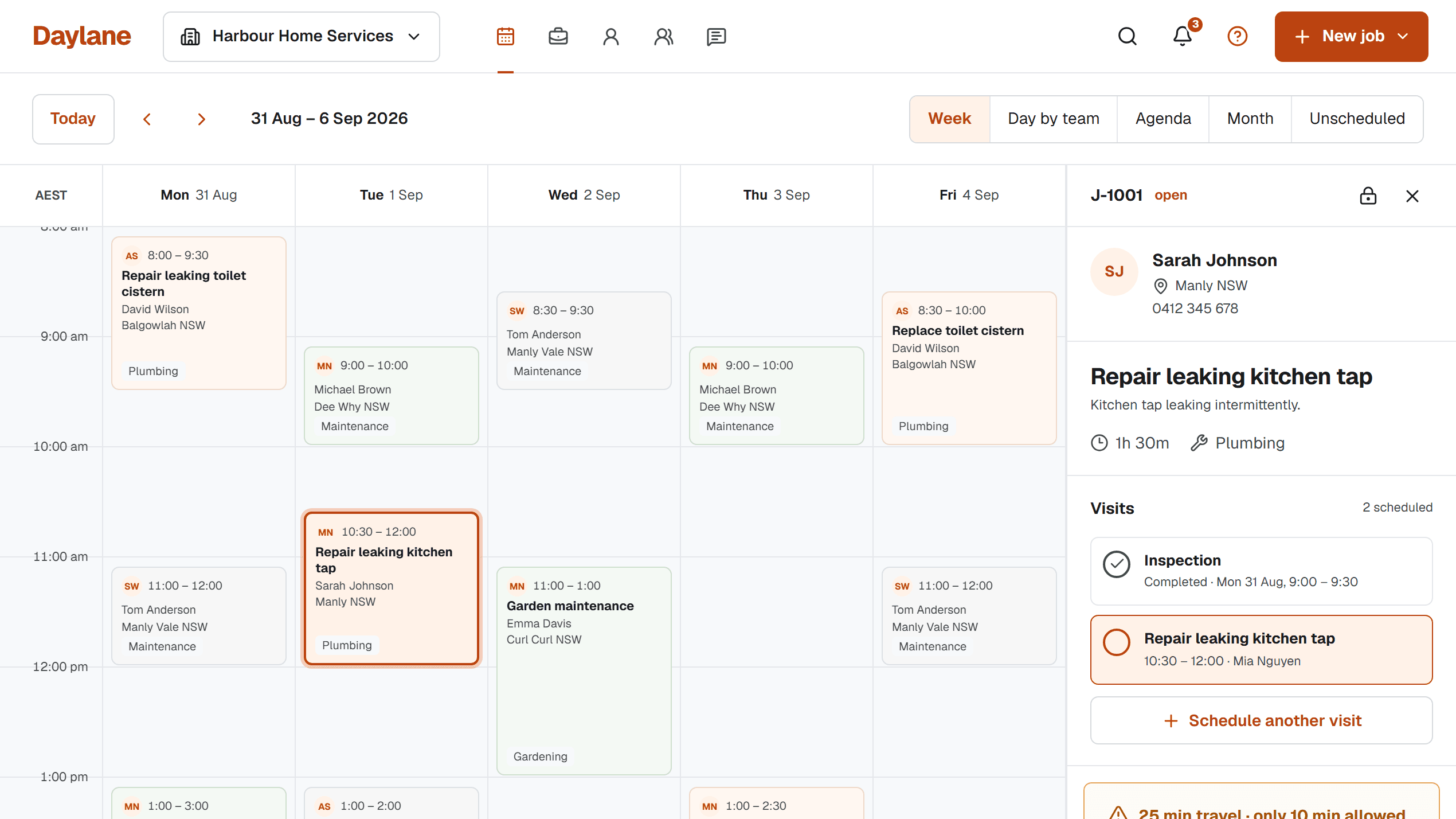
Move from a shared calendar when customer details, return work and changes are becoming difficult to trace. Pick a clear cutover date, transfer a manageable set of upcoming work, and verify each Visit before making the job scheduler the source of truth. Keep historical access while avoiding two editable versions of the same future schedule.
Identify what the calendar is currently holding
Review a typical week's entries. Some may be confirmed Visits, others reminders to call someone, and others personal commitments. Those items should not all become Jobs. Separate real work from follow-up actions before importing or manually recreating records.
Check where the service address, customer contact and scope currently live. An event titled 'Sam Tuesday' may rely on a message thread for every useful detail. Resolve that ambiguity while the context is still easy to retrieve.
Choose a small, explicit cutover
An example cutover is next Monday, with the following two weeks of confirmed work checked first. The right horizon depends on your booking cycle. Record which system owns changes before and after the date, and tell everyone who edits the schedule.
Preserve the old calendar for reference as appropriate. Do not delete history or assume an export contains every note and attachment. Try a sample transfer and inspect what actually arrived.
Verify a representative set of work
Check a normal Visit, a customer with multiple addresses, a return Visit and a recurring service. Confirm dates, local times, duration, assigned people and Location details. Look for duplicates created by repeating a manual transfer.
- Match each future commitment to one active Visit.
- Keep personal busy time accounted for when reviewing availability.
- Confirm which future recurring occurrences were transferred.
- Keep a small exception list for incomplete customer or Location details.
Understand a feed before depending on it
Daylane includes a calendar feed. Treat a subscribed feed as a viewing aid and make operational edits in Daylane. Refresh timing depends on the calendar receiving the feed; verify urgent changes in the source schedule.
Google Calendar, Outlook.com and Microsoft 365 sync are available with Pro+. Calendar feeds are available on both plans. During the 14-day trial, test the actual workflow from a changed Visit through to the view your team uses.
Sources and scope
An original operational guide from the Daylane team at Blu Mint Digital. Scenarios, durations and message wording are illustrative planning examples, not customer results or industry benchmarks. Product references were checked against the Daylane implementation on 5 September 2026. Adapt the workflow to your service, customer agreements and working conditions.
How we write and maintain our guides. Free templates and planning tools.