
Ask the person who will attend a return which decisions the record must support. Start with a real workflow or a clearly fictional practice example, then test whether the next person can identify scope, readiness and the customer promise. This is a review method, not a report of an operator interview.
Ask about decisions before adding fields
A longer record is not automatically more useful. Identify what the attending person must know before departure and what can remain in the supporting history. Keep technical repair instructions within the business's appropriate professional records.
| Decision | Question for the reviewer |
|---|---|
| Purpose | Can you explain what this return is meant to achieve? |
| Evidence | Can you distinguish the customer report from recorded findings? |
| Readiness | Is the required part or equipment confirmed available? |
| Access | Can you identify the current meeting arrangement? |
| Exception | Do you know who decides if the work cannot proceed? |
Try removing a field and explain the effect
For each proposed field, ask what decision becomes harder if it is absent. Keep fields that support a concrete action. Move lengthy background into the appropriate supporting record rather than repeating it in every brief.
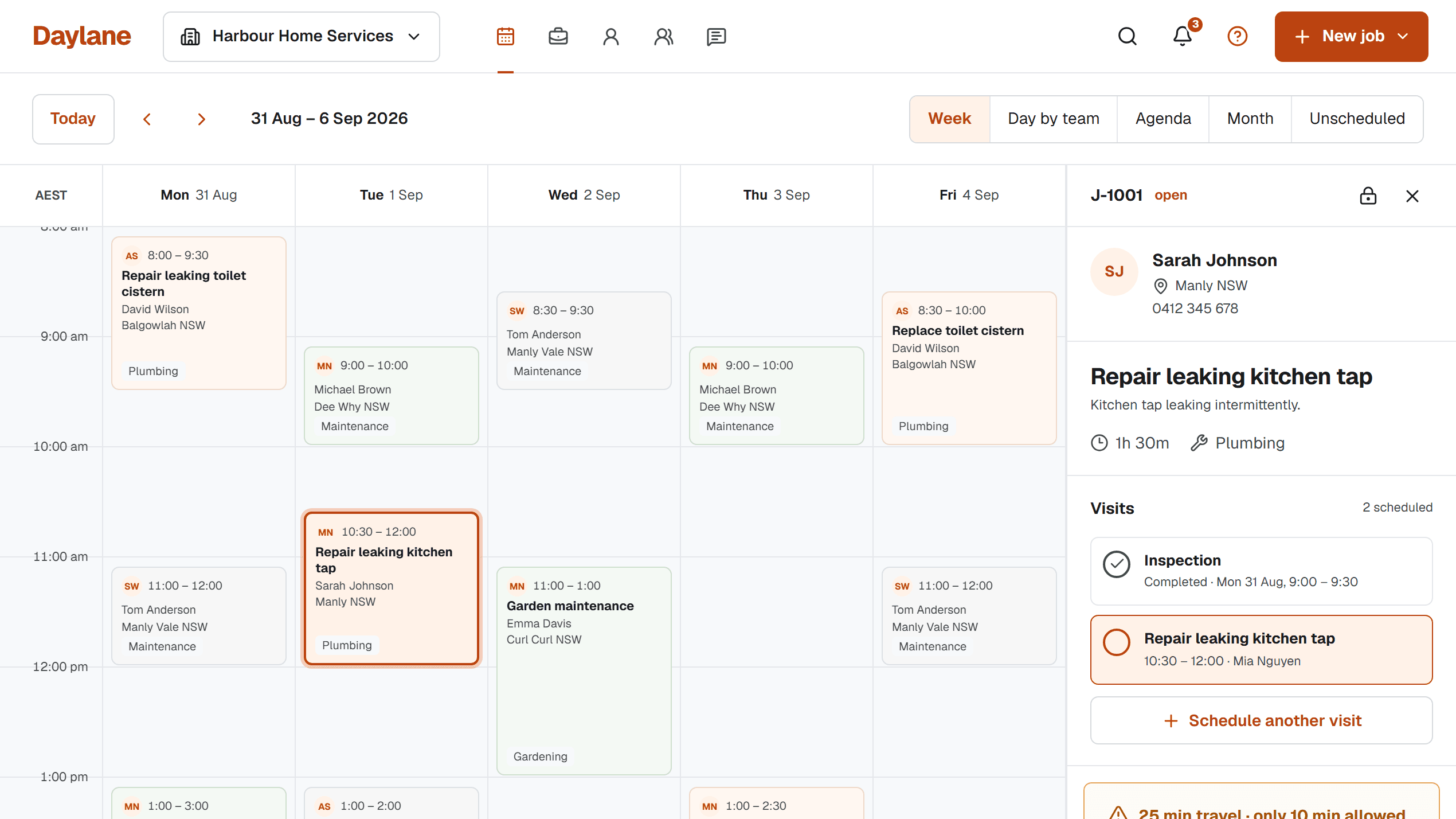
In Daylane, check the actual assigned-Visit view. A field saved elsewhere may not appear there automatically, particularly Location access notes. Record essential current attendance context in the Visit instructions.
Record feedback with its limits
Note the reviewer's role, the scenario and the questions that required clarification. Do not describe a practice review as a measured customer outcome. If you use real examples, obtain permission before publishing or sharing them beyond the intended team.
Revise the template and have another appropriate reader attempt the same task. Keep a short explanation of why each retained field helps so the template does not grow through habit alone.
Sources and scope
An original operational guide from the Daylane team at Blu Mint Digital. Scenarios, durations and message wording are illustrative planning examples, not customer results or industry benchmarks. Product references were checked against the Daylane implementation on 5 September 2026. Adapt the workflow to your service, customer agreements and working conditions.
How we write and maintain our guides. Free templates and planning tools.