
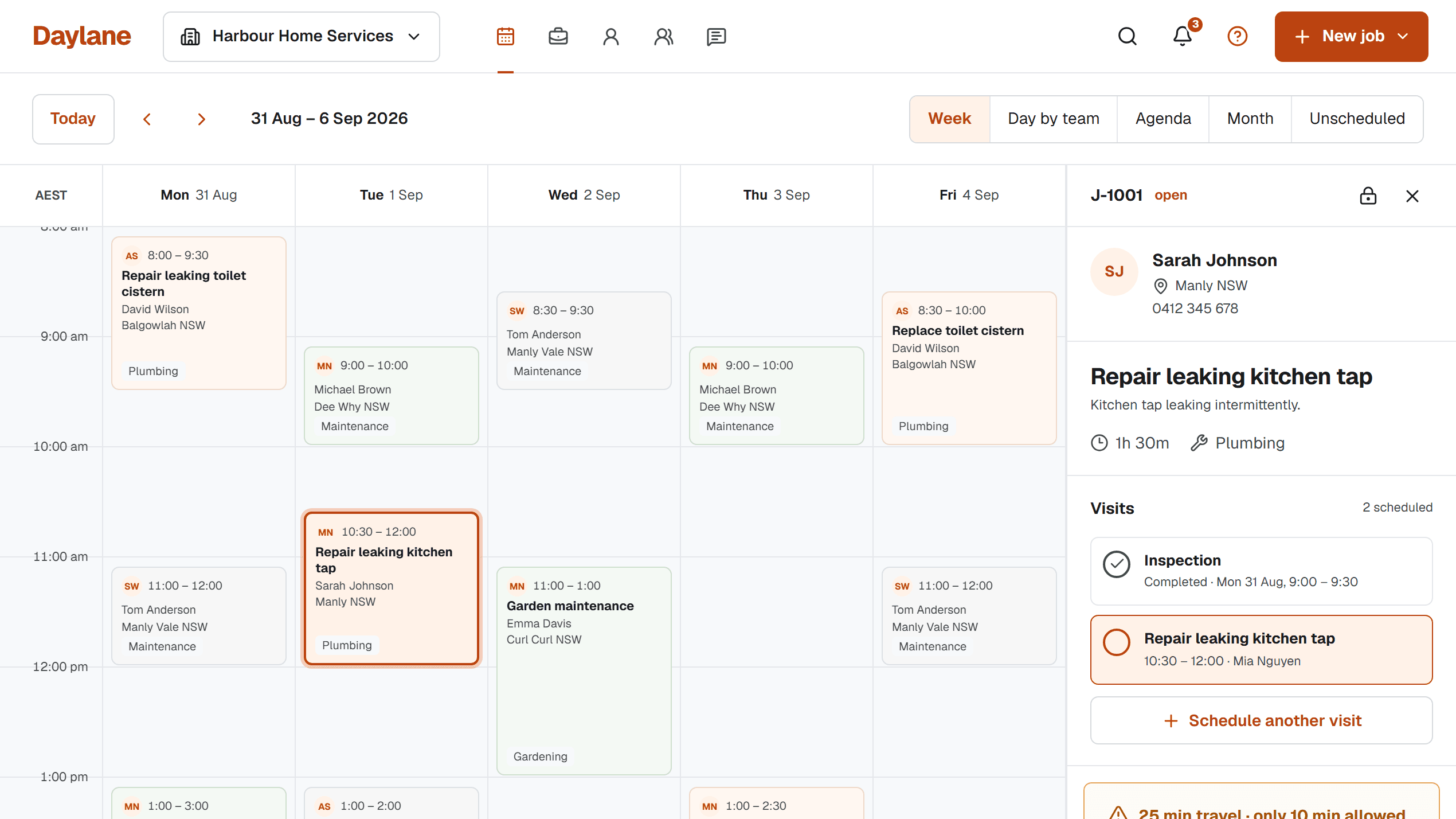
Record a customer's preference as a preference, an access restriction as a constraint and an agreed Visit as a commitment. Include who supplied the information and when it should be checked again. This simple distinction lets you offer useful options without turning an old note into a promise the customer never made.
Ask one question that reveals the difference
When someone says Tuesday morning suits them, ask whether other times are possible. A preference leaves options; a hard restriction may determine the entire sequence. If another person controls access, verify the arrangement with that person too.
Do not infer that a customer is flexible because they work from home or have previously accepted a change. Use what they have actually agreed for the current service.
Use notes with an explicit meaning
The following fictional records describe three different things. Keeping the wording distinct makes it easier for another scheduler to understand which details can be negotiated.
| Type | Example record |
|---|---|
| Preference | Prefers Tuesday mornings; ask before offering another day |
| Constraint | Site contact can provide access only between 9 and 11 on agreed weekdays |
| Commitment | Visit confirmed for Tuesday 8 September, arrival 9–10 am |
Keep the information at the right level
A property-specific access constraint belongs with that Location's context. A one-off request to avoid a date belongs with the affected Visit or Job. A broad customer preference should not override a different contact's arrangements at another site.
Use clear notes in the fields your scheduling system actually provides. This guide describes a record-keeping convention; it does not imply that Daylane automatically prioritises, scores or enforces every preference.
Review preferences when circumstances change
When a customer changes their routine, update the current note and check any future Visits it affects. Record the new agreement rather than accumulating contradictory instructions such as 'mornings only' and 'afternoons preferred'. Preserve history where your business needs it, while keeping the active instruction easy to find.
When a cancellation opens an earlier slot, use a recorded preference to choose whom to ask, not as permission to move their Visit without agreement. Offer a concrete option and keep the existing booking unless the change is accepted.
Sources and scope
An original operational guide from the Daylane team at Blu Mint Digital. Scenarios, durations and message wording are illustrative planning examples, not customer results or industry benchmarks. Product references were checked against the Daylane implementation on 5 September 2026. Adapt the workflow to your service, customer agreements and working conditions.
How we write and maintain our guides. Free templates and planning tools.