
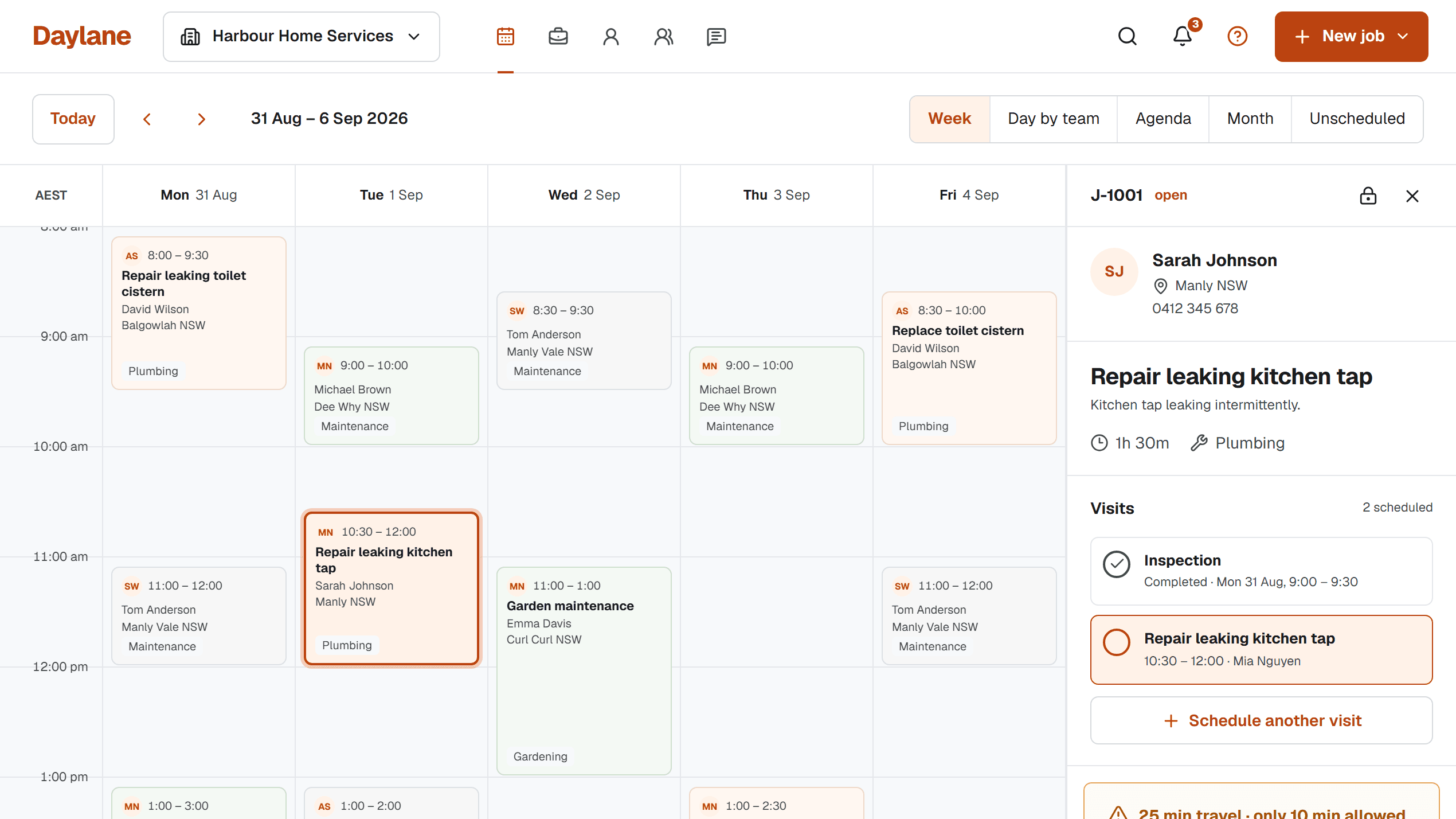
Choose a migration scope based on what must be usable for the next working day and what history must remain available. Moving upcoming commitments first can reduce the amount to reconcile at once. A broader historical move needs a separate mapping and preservation plan.
Compare the two scopes explicitly
The table describes planning tradeoffs, not a universal recommendation. Keep the original records available and determine any record-preservation obligations through your normal business process.
| Scope | Immediate benefit | Work still required |
|---|---|---|
| Upcoming Customers, Locations and commitments | Smaller set to verify before the next day | Keep historical records accessible elsewhere |
| Upcoming work plus relevant open-Job history | Useful context for returns and dependencies | Map old notes and current scope carefully |
| Broad historical migration | Potentially one larger reference set | More mapping, validation and duplicate review |
Match the plan to actual import capabilities
Daylane's CSV import adds Customers and optionally one initial Location for each new Customer. It does not import Jobs, Visits or every historical dataset. Plan upcoming bookings through the supported workflow and do not assume a Customer CSV recreates the whole old calendar.
Choose a clear transition date and decide which system owns changes after it. Re-entering the same commitment in two places without a reconciliation rule can create conflicting customer promises.
Verify a small slice before expanding
Check one normal Visit, one changed booking and one open Job needing a return. Confirm the Customer, Location, scope, time and next action in the new workflow. Reconcile the counts with the source list.
Expand only after the first slice is usable and the remaining-history plan is clear. Keep unresolved exceptions on a named review list so they do not disappear between the old and new systems.
Sources and scope
An original operational guide from the Daylane team at Blu Mint Digital. Scenarios, durations and message wording are illustrative planning examples, not customer results or industry benchmarks. Product references were checked against the Daylane implementation on 5 September 2026. Adapt the workflow to your service, customer agreements and working conditions.
How we write and maintain our guides. Free templates and planning tools.