
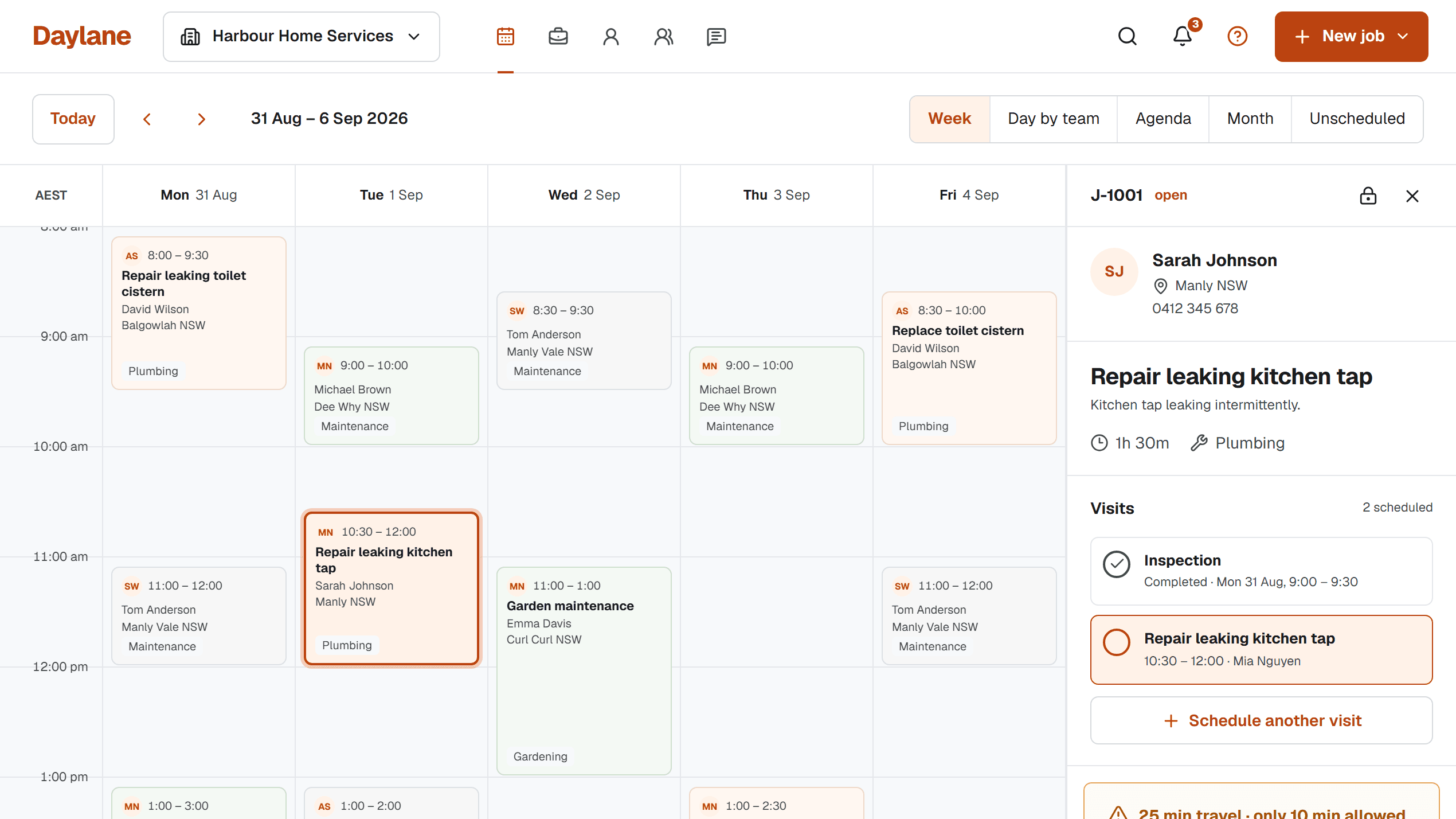
Start with one real piece of work and separate who it is for, where it happens, what is agreed and when someone will attend. In Daylane those are the Customer, Location, Job and Visit. Check each layer before confirming the first booking.
Map the booking before typing
The fictional example uses a business customer arranging an assessment at its office. The Job title describes an inspection, so it does not promise a repair before the scope is established.
| Record | Example | Check |
|---|---|---|
| Customer | Example Property Services | Correct scheduling contact |
| Location | North office, full service address | Correct building and entrance |
| Job | Inspect meeting-room door | Assessment scope agreed |
| Visit | A confirmed date and reserved duration | Access, travel and assignee checked |
Use the New Job workflow carefully
Daylane's New Job form can use a saved Customer or add someone new. Review the Customer source before entering duplicate contact details. Select the intended Location or enter the service address as the workflow requires.
Give the Job a concrete title and keep customer-readable instructions separate from internal context. Review timing, duration and assignment if scheduling attendance now. A customer preference should not become a confirmed Visit without checking capacity and agreement.
Verify the saved records
Open the saved Job and compare its Customer, Location and scope with the request. Inspect the Visit's date, time and instructions, then check the schedule. If the same customer has several properties, verify the full address rather than relying only on a label.
Before sharing a Visit Page, read the customer-facing title, address and instructions. Keep the first setup small enough to review end to end before importing more Customers or creating recurrence.
Sources and scope
An original operational guide from the Daylane team at Blu Mint Digital. Scenarios, durations and message wording are illustrative planning examples, not customer results or industry benchmarks. Product references were checked against the Daylane implementation on 5 September 2026. Adapt the workflow to your service, customer agreements and working conditions.
How we write and maintain our guides. Free templates and planning tools.