
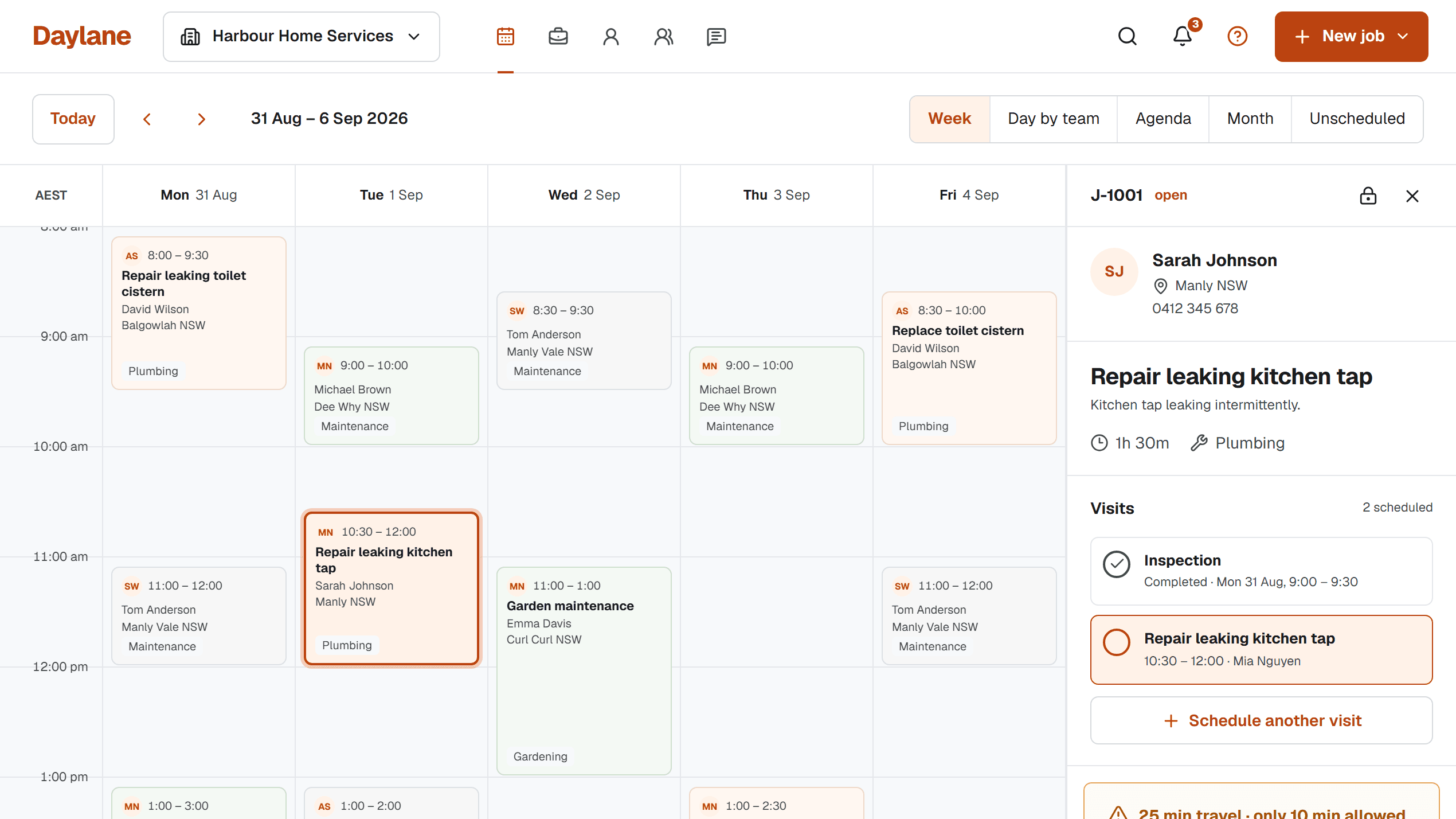
When access is unavailable, record what happened, follow the agreed contact process and decide the next action. Keep a failed attendance separate from completed work. Any fee or contractual consequence depends on your agreement and applicable requirements; this guide covers the operational record and rebooking workflow.
Check the current access agreement
Confirm the service address, arrival window and latest instructions before assuming the customer has missed the Visit. An outdated note, wrong unit number or unprocessed booking change may explain the problem.
Use the customer's agreed contact method and your business's attendance procedure. Do not improvise entry to a property. The schedule needs a clear outcome, but it does not override access permission or safety procedures.
Write factual attendance notes
Record the arrival time, the issue preventing access and the contact attempts made. Use observable facts instead of blame. 'Reception closed at 9:10; called the listed contact at 9:12 with no answer' is clearer than 'customer wasted our time'.
- Visit date, time and Location checked.
- Access instruction that was followed.
- Observed reason work could not begin.
- Contact attempts and any response.
- Whether work was started or any agreed work was completed.
- Owner and timing of the next contact.
Keep the Job's next step visible
If the agreed work remains outstanding, do not complete the Job merely to remove the Visit from the day's list. Record the attendance outcome and arrange the next action. A return may need a different access contact or an explicit confirmation before scheduling.
For example, after a missed office clean, the follow-up might be 'manager to confirm reception access for Thursday; scheduler to call Wednesday afternoon'. That tells the next person what must happen before a slot can be promised.
Confirm the replacement attendance
Agree the new date and window with the person who controls access, not only the person who requested the work. Repeat any revised instructions in the appropriate private record. Review the rest of the day before fitting the replacement around existing commitments.
If no-access incidents repeat at one Location, address the process with the customer. A clearer contact, a different arrival window or a changed confirmation step may solve the underlying issue. Keep the history factual so that discussion has a useful basis.
Sources and scope
An original operational guide from the Daylane team at Blu Mint Digital. Scenarios, durations and message wording are illustrative planning examples, not customer results or industry benchmarks. Product references were checked against the Daylane implementation on 5 September 2026. Adapt the workflow to your service, customer agreements and working conditions.
How we write and maintain our guides. Free templates and planning tools.