
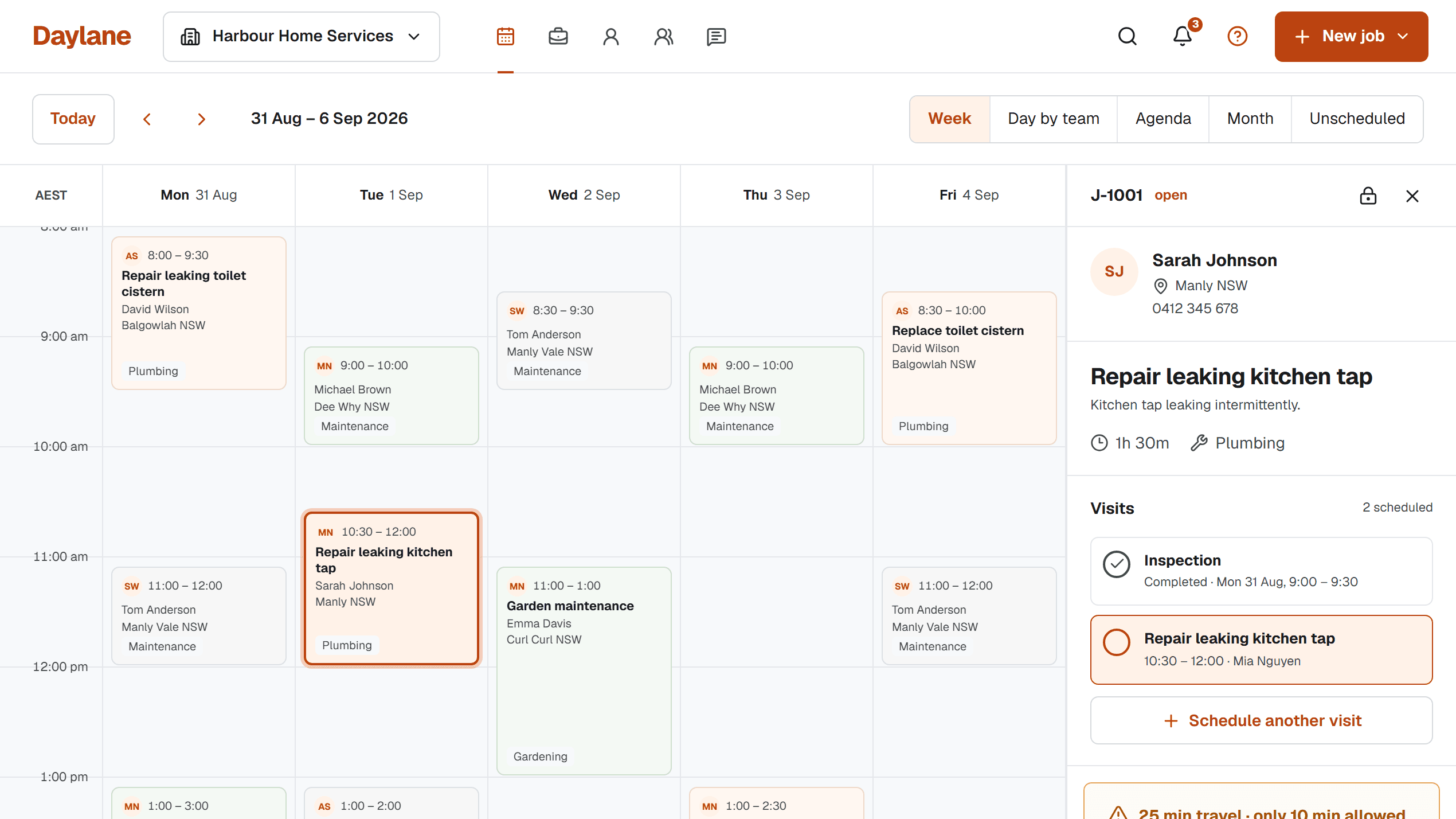
Give one person ownership of an active customer offer and recheck the current schedule before saving or confirming it. Two people can read the same apparently free opening and make incompatible promises. Viewing a gap does not reserve it, and a draft conversation is not a saved booking.
Recognise the race between two offers
This is a fictional coordination exercise, not a claim about a measured production incident. Both schedulers begin from the same visible opening, but the customer's agreement and the saved record happen at different times.
| Step | Scheduler A | Scheduler B |
|---|---|---|
| Review | Sees 10:00 opening | Sees 10:00 opening |
| Offer | Discusses it with Customer A | Discusses it with Customer B |
| Risk | Assumes the gap is held | Makes the same assumption |
| Control | Names an offer owner and checks current state | Checks ownership before promising the slot |
Use a shared offer convention
Agree how the team marks an offer under discussion in its normal coordination channel, who can confirm it and when an unanswered offer will be reviewed. Do not invent a confirmed customer Visit simply to hold a speculative opening.
Before saving, refresh the relevant schedule and review warnings. Daylane has request identifiers and record-level safeguards for several actions, but these should not be interpreted as a universal reservation lock covering every unsaved offer, edit and assignment path.
Confirm only the saved, reconciled arrangement
After a save, inspect the current Visit and adjacent assignments before sending the final promise. If the save reports a changed request or conflict, read the current state and resolve it; do not repeatedly submit the old form without review.
When two promises have already been made, identify the actual customer commitments and work through alternatives openly. Record the final outcome and update both schedulers so an old conversation does not recreate the conflict.
Sources and scope
An original operational guide from the Daylane team at Blu Mint Digital. Scenarios, durations and message wording are illustrative planning examples, not customer results or industry benchmarks. Product references were checked against the Daylane implementation on 5 September 2026. Adapt the workflow to your service, customer agreements and working conditions.
How we write and maintain our guides. Free templates and planning tools.