
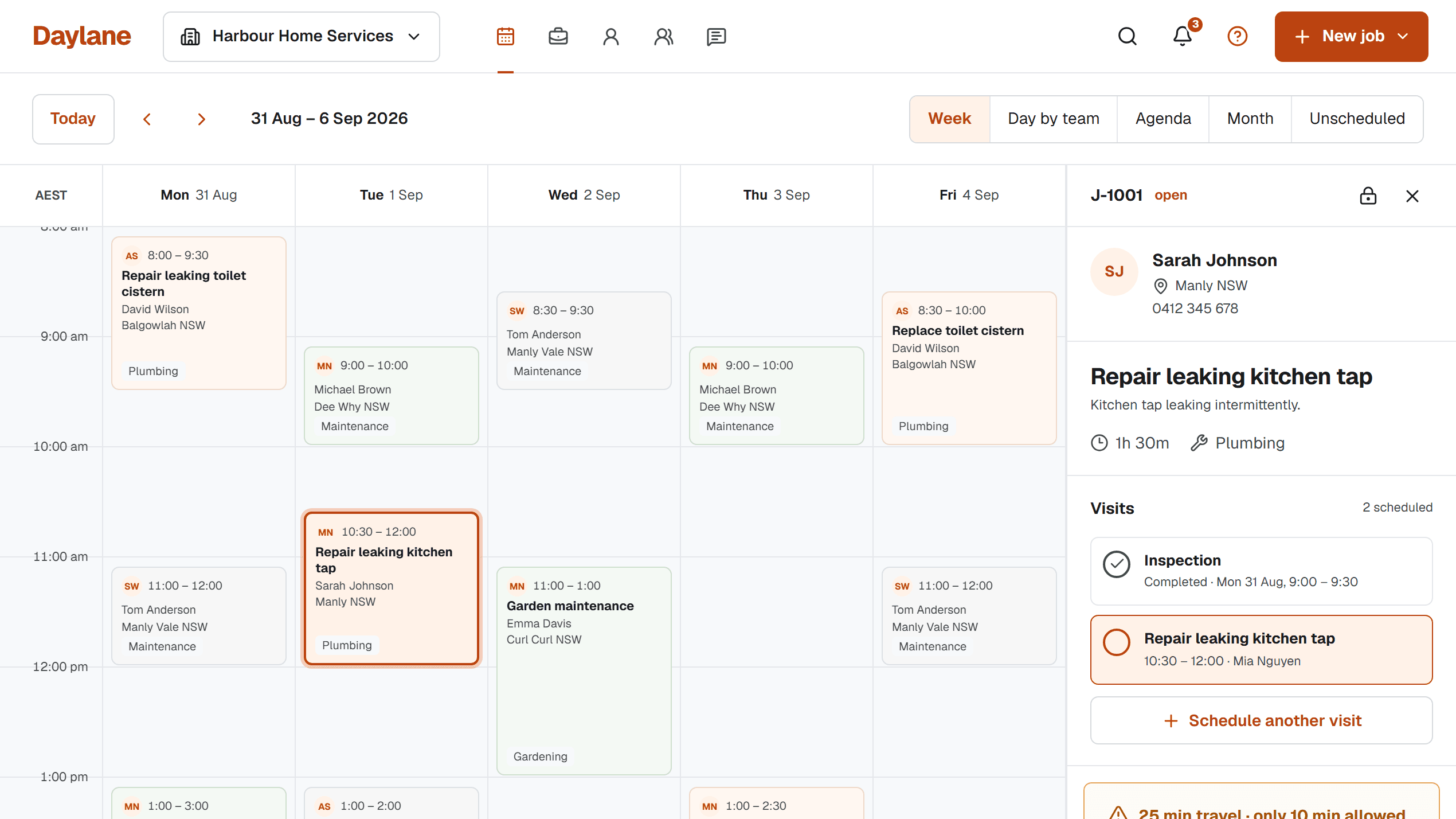
Compare the customer relationship, service Location, reported work and existing booking before deciding that two requests are duplicates. Two people may report the same issue through different channels, or one customer may genuinely need separate work. Similar wording is a reason to review, not a reason to discard a request.
Match the request to the actual work
In the fictional examples below, the address alone does not determine the outcome. Confirm the relationship between the requests with the commissioning customer when it is unclear.
| Two requests | Likely interpretation | Check before deciding |
|---|---|---|
| Tenant calls; manager submits the same door issue | Possibly one Job | Same room, scope and approval? |
| Office clean and door repair at one site | Independent work | Separate scope and completion decisions |
| Follow-up email after an unanswered form | Possibly a status enquiry | Has the original request been reviewed? |
| A new fault after an earlier completed repair | Needs fresh review | New issue or follow-up to previous work? |
Choose a record to own the next action
If both requests refer to one piece of work, identify the Job or request that will carry the current scope and communication. Note the second channel and explain to the customer which booking is being handled.
Daylane's Booking Request review does not mean every similar submission is automatically merged. Inspect existing Jobs and Visits before creating another booking. Do not assume a Customer CSV duplicate rule also applies to incoming service requests.
Resolve the second request without losing context
Use a factual note such as 'Reviewed with the customer: this refers to the inspection already arranged for Friday under J-0101.' Follow the request-review controls available to you and verify the resulting status.
If the requests are different, name the Jobs distinctly and preserve both scope decisions. Before sending confirmations, check that neither message accidentally implies two attendances for the same agreed work.
Sources and scope
An original operational guide from the Daylane team at Blu Mint Digital. Scenarios, durations and message wording are illustrative planning examples, not customer results or industry benchmarks. Product references were checked against the Daylane implementation on 5 September 2026. Adapt the workflow to your service, customer agreements and working conditions.
How we write and maintain our guides. Free templates and planning tools.