
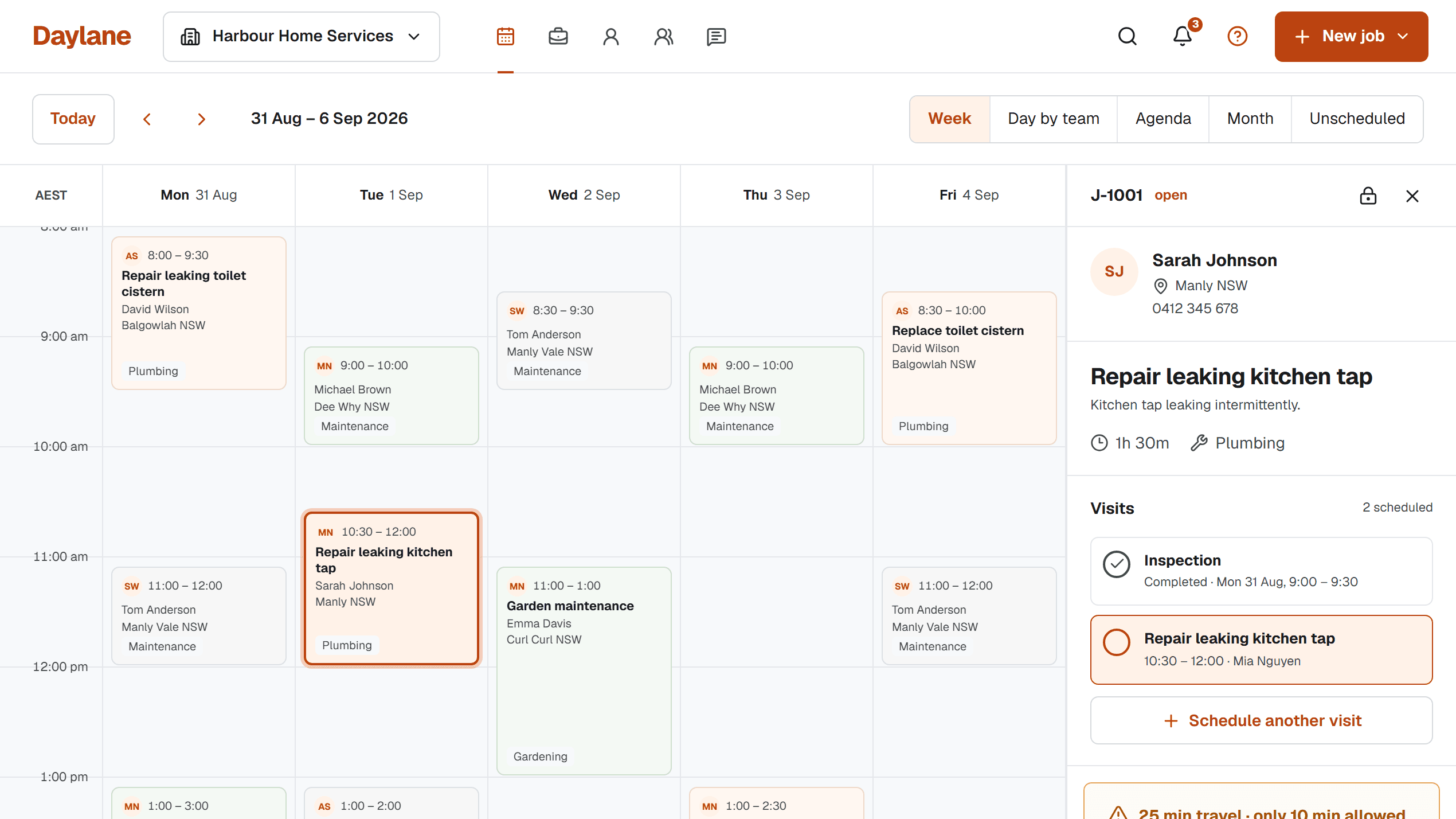
Test the actual tasks people need to complete on their usual devices: find a Visit, read its instructions and perform the actions their role allows. Check keyboard, touch and enlarged text separately. A page looking good on one phone is useful evidence, but it is not a complete accessibility assessment.
Choose observable tasks
Use a clearly labelled practice scenario and avoid sending real customer updates during the exercise. Record the device, browser, role and text-size setting so a finding can be reproduced.
| Mode | Task | What to observe |
|---|---|---|
| Keyboard | Reach and activate navigation and form controls | Visible focus and understandable order |
| Touch | Open a Visit and choose the intended control | Targets distinguishable without accidental activation |
| Enlarged text | Read title, timing and instructions | No clipped text or hidden action |
| Narrow screen | Read a comparison table | Table scroll is contained and usable |
| Form validation | Leave a required field empty in practice | Error is explained and correction is clear |
Use labelled alternatives to dragging
Daylane's Reschedule Visit form offers labelled date, start, duration and arrival-window controls. Use that route when calendar dragging is difficult. Check the saved result and any warnings rather than relying only on the movement of a card.
For field instructions, prefer plain wording and a short sequence. Do not encode the next action only through colour, an unexplained icon or a colleague's memory.
Record scoped findings and retest changes
Write a concrete finding such as 'At the tested text size, the arrival label was clipped in this browser' and include the task that was affected. Automated checks can help detect some issues but do not replace a person's experience of the workflow.
After a fix, repeat the affected task and check adjacent controls. Keep successful findings scoped to the tested pages, devices and actions rather than claiming universal accessibility.
Sources and scope
An original operational guide from the Daylane team at Blu Mint Digital. Scenarios, durations and message wording are illustrative planning examples, not customer results or industry benchmarks. Product references were checked against the Daylane implementation on 5 September 2026. Adapt the workflow to your service, customer agreements and working conditions.
How we write and maintain our guides. Free templates and planning tools.