
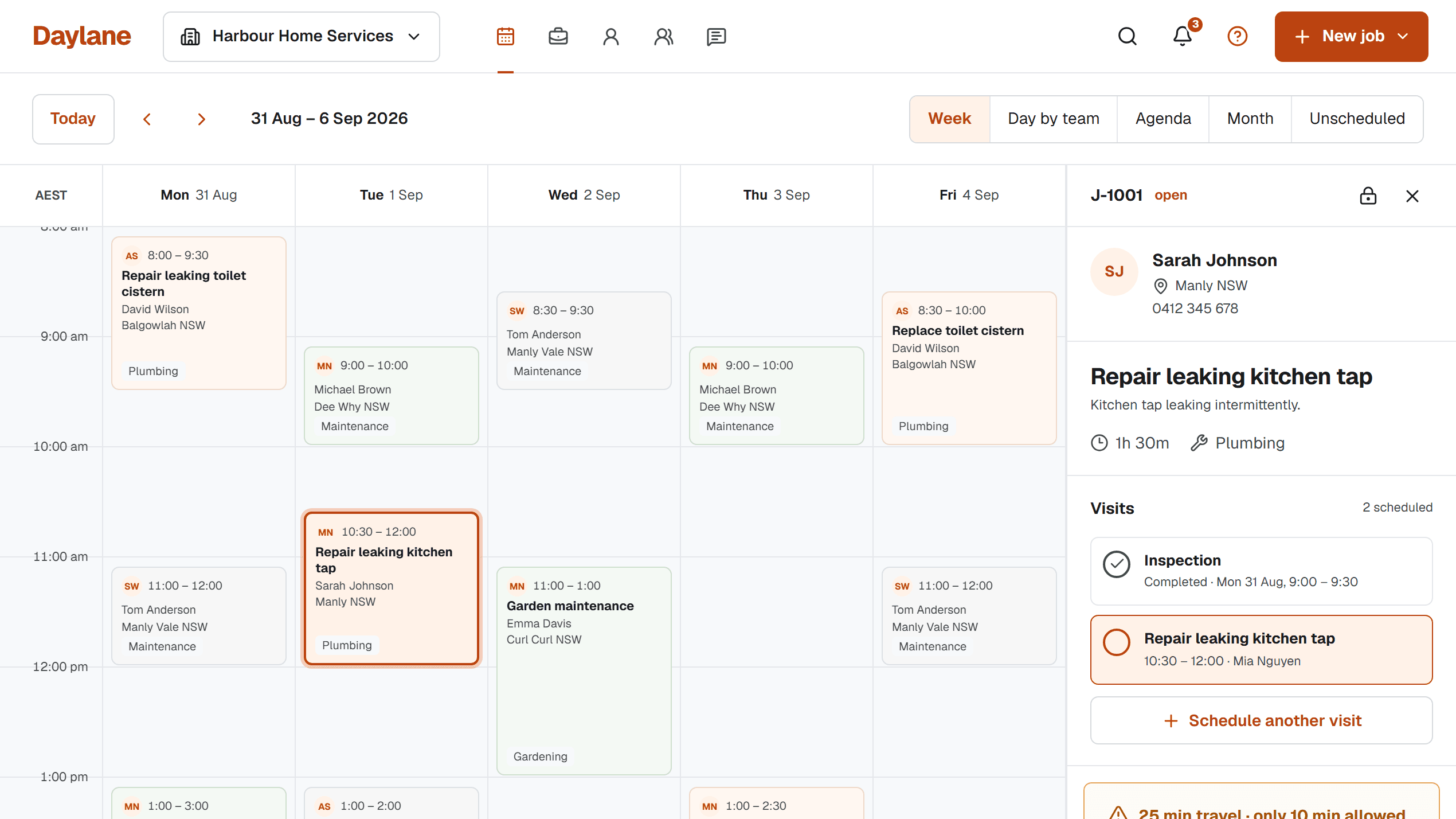
An appliance repair often takes more than one attendance. Create one Job for the reported issue, then record each inspection or return as a Visit. Keep the Job open while a part, approval or further work is outstanding. Completing the first attendance should not erase the next action.
Capture the intake details that affect attendance
Ask for the service address, appliance type, reported problem and the contact arranging access. Where appropriate, ask the customer to provide the model information rather than guessing from a brand name. Capture what they report without presenting it as a confirmed diagnosis.
Record whether a property manager, tenant or owner is coordinating the booking. The person providing access may differ from the person approving the work. Make that distinction clear before proposing a return time.
Give the first Visit a defined purpose
Label the attendance so the schedule makes clear whether it is an assessment or an agreed repair. Estimate the Visit duration from the work you expect to undertake, with room for the actual circumstances. This guide does not prescribe technical repair or electrical safety procedures.
A useful example is Job 'reported dishwasher drainage issue', with Visit one 'inspect reported fault'. After attendance, the outcome can state what was assessed, what remains and whether customer approval is needed.
Schedule a return only when its dependencies are ready
Do not promise a firm repair date from an unconfirmed delivery estimate. Record the part follow-up and tell the customer when you will provide the next update. Once the part and required approval are ready, check the right person's availability and arrange access.
Add the return under the original Job. Recreating the customer and work as a fresh Job can separate the original findings from the technician's next attendance.
Check the Job before the invoicing hand-off
After the return, record completed work and any unresolved item using factual language. Decide explicitly whether the Job is complete. If another attendance is needed, give it a next action instead of relying on the last Visit's status.
Daylane can prepare selected completed-Job details for a manual Free Invoice App hand-off. Review the customer-facing summary separately from internal findings. Pricing, tax and the final invoice remain in your invoicing process.
Sources and scope
An original operational guide from the Daylane team at Blu Mint Digital. Scenarios, durations and message wording are illustrative planning examples, not customer results or industry benchmarks. Product references were checked against the Daylane implementation on 5 September 2026. Adapt the workflow to your service, customer agreements and working conditions.
How we write and maintain our guides. Free templates and planning tools.