
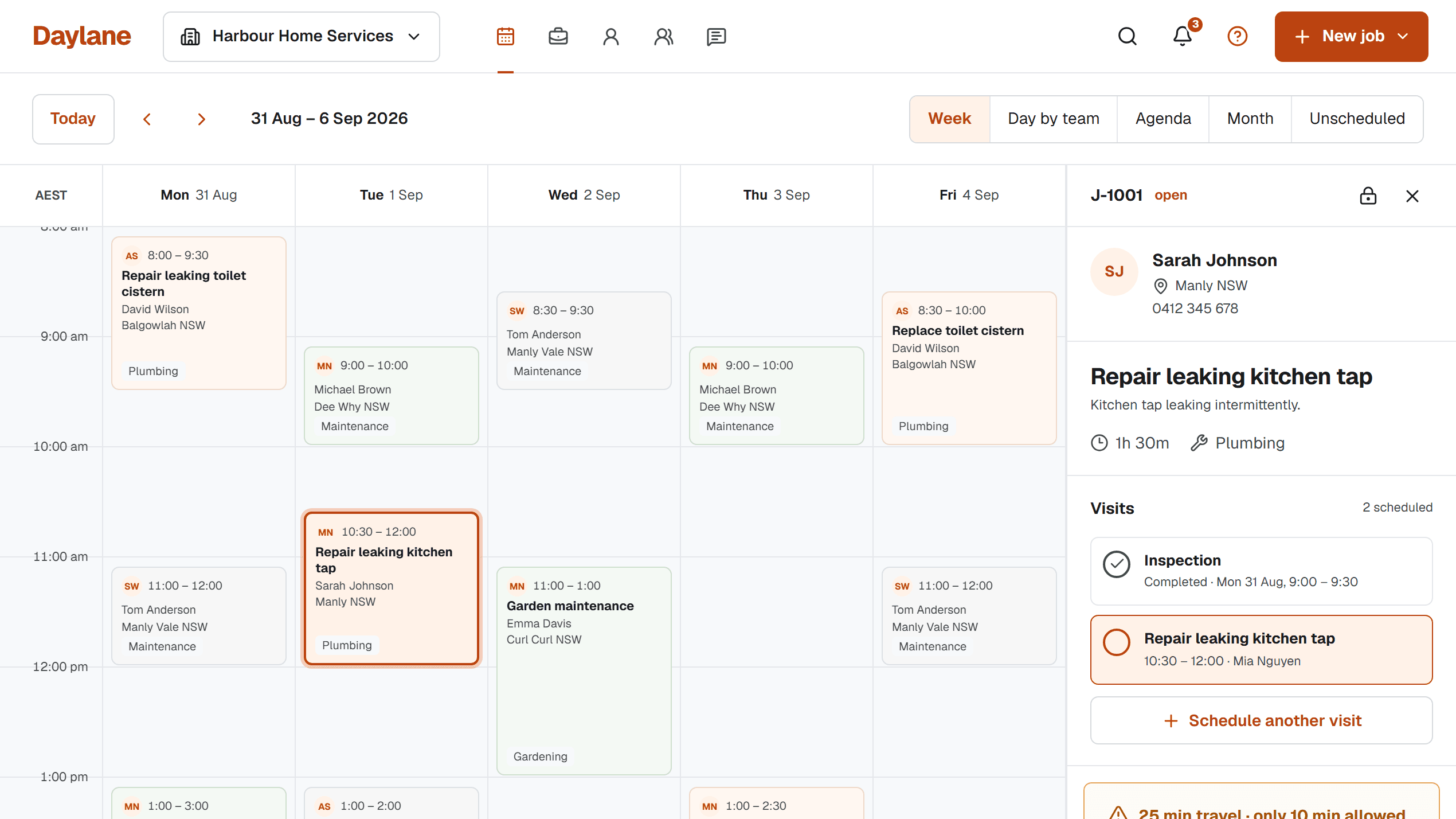
A Job waiting for a part needs a follow-up process before it needs another Visit. Record the missing dependency, who will check it and when the customer will receive an update. Arrange the return after confirming readiness, required people and access. An estimated delivery date is not the same as a confirmed repair appointment.
Record the dependency after the first attendance
The attending person should state what remains and what must be ready before they return. Keep technical identification in the appropriate Job notes; do not rely on a vague calendar title such as 'finish repair'. A scheduler needs to know whether the blocker is a part, approval or both.
Keep the original Job open while the agreed work is unfinished. The first Visit can be recorded as attended without implying that the whole Job is ready for completion or invoicing.
Assign a check and a customer update
Use an explicit next action: 'confirm availability with supplier Thursday morning; update customer by Thursday afternoon'. Record the owner so two people do not assume the other is making the call.
If the delivery estimate changes, update the customer at the promised time even when there is no firm replacement date. Explain what is known and when you will review it again. Avoid repeatedly offering a new attendance time based on another unconfirmed estimate.
Use a readiness check before rebooking
A delivered item may still need checking against the Job requirements before the Visit is ready. Follow your normal technical process and confirm any customer approval that remains outstanding.
- Required part or material confirmed ready for the planned work.
- Approvals needed for the next step recorded.
- Appropriate person and equipment available.
- Customer access checked for the proposed return.
- Visit duration estimated from the remaining work.
Preserve context through the return
Add the return Visit under the existing Job. Brief the attending person on what changed since the inspection and which tasks remain. That connection is particularly useful when a different team member attends.
At completion, record the outcome and make an explicit Job completion decision. If another dependency emerges, give it an owner and review point instead of restarting a vague waiting cycle. Review older parts-dependent Jobs each week so an unanswered supplier enquiry cannot disappear behind newer work.
Sources and scope
An original operational guide from the Daylane team at Blu Mint Digital. Scenarios, durations and message wording are illustrative planning examples, not customer results or industry benchmarks. Product references were checked against the Daylane implementation on 5 September 2026. Adapt the workflow to your service, customer agreements and working conditions.
How we write and maintain our guides. Free templates and planning tools.