
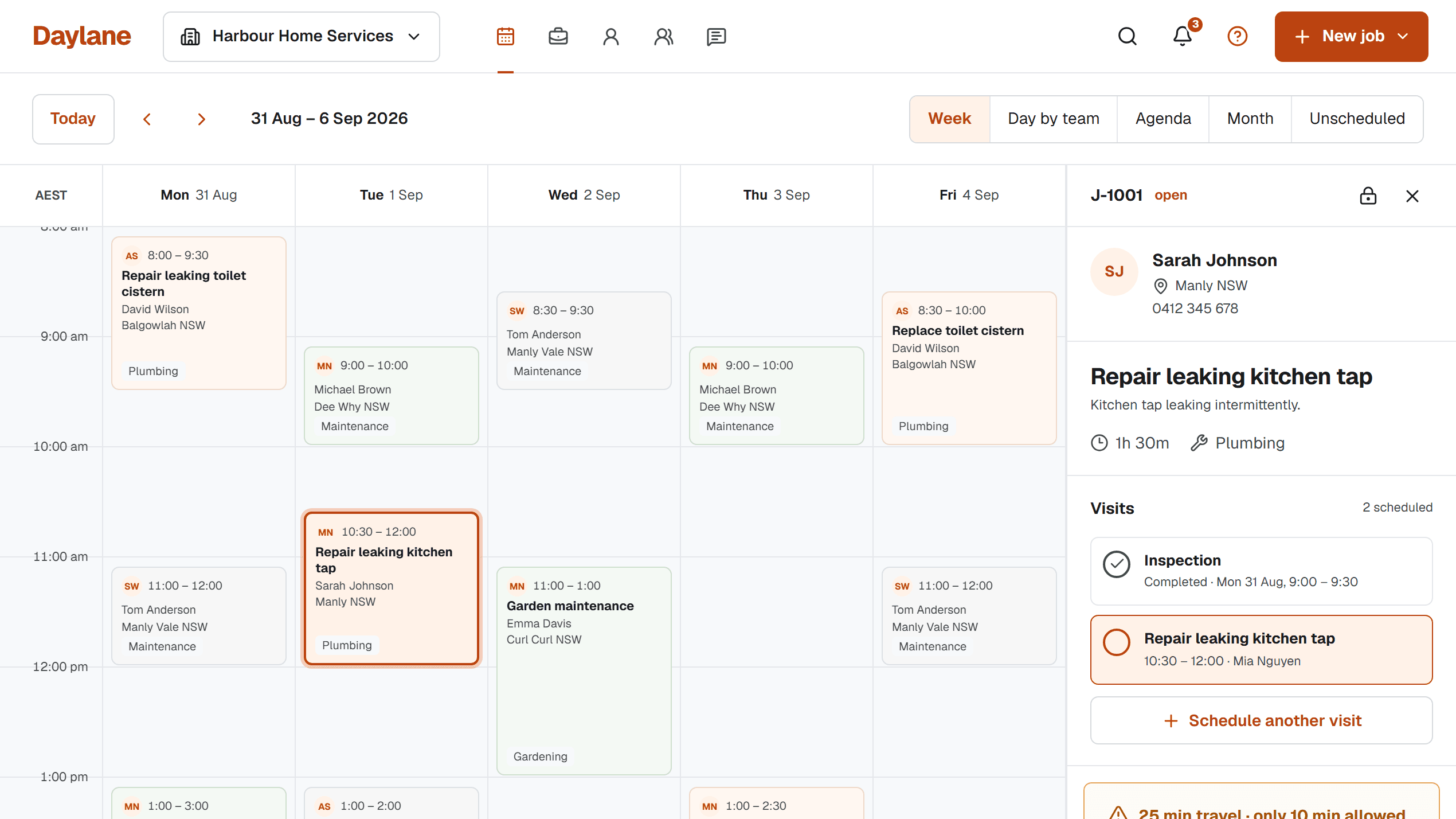
After a weather-disrupted round, compare the original plan, the change decision and the eventual outcome. Use that record to improve future recovery planning. This guide supplies a review method; it does not present an interview, measured customer result or forecast of weather conditions.
Preserve the sequence of decisions
A final calendar alone does not explain why work moved. Keep enough dated context to distinguish the weather-related decision from a later access change or customer preference.
| Record | What to capture |
|---|---|
| Original plan | Visit, scope, duration and customer promise |
| Disruption | Observed condition and decision time |
| Change | Work moved, retained or awaiting review |
| Communication | Actual update and promised next contact |
| Outcome | When work happened and what remained |
Separate causes before changing estimates
If a recovered day ran long, ask whether the cause was extra service work, a disposal stop, access or the order of Visits. Do not automatically add the entire delay to every future gardening duration.
Use factual descriptions and keep technical or safety decisions within the appropriate business process. The review should explain scheduling consequences without pretending to assess conditions remotely.
Make one recovery rule more specific
A useful finding might be that customers with fixed reception access need to be contacted before flexible residential work is moved. Another might be that a disposal stop was omitted from the recovery day. Test the revised rule against the next comparable disruption.
If you share the review externally, use permissioned material and remove unnecessary customer details. Label illustrative examples clearly and do not generalise a single disrupted day into a performance claim.
Sources and scope
An original operational guide from the Daylane team at Blu Mint Digital. Scenarios, durations and message wording are illustrative planning examples, not customer results or industry benchmarks. Product references were checked against the Daylane implementation on 5 September 2026. Adapt the workflow to your service, customer agreements and working conditions.
How we write and maintain our guides. Free templates and planning tools.