
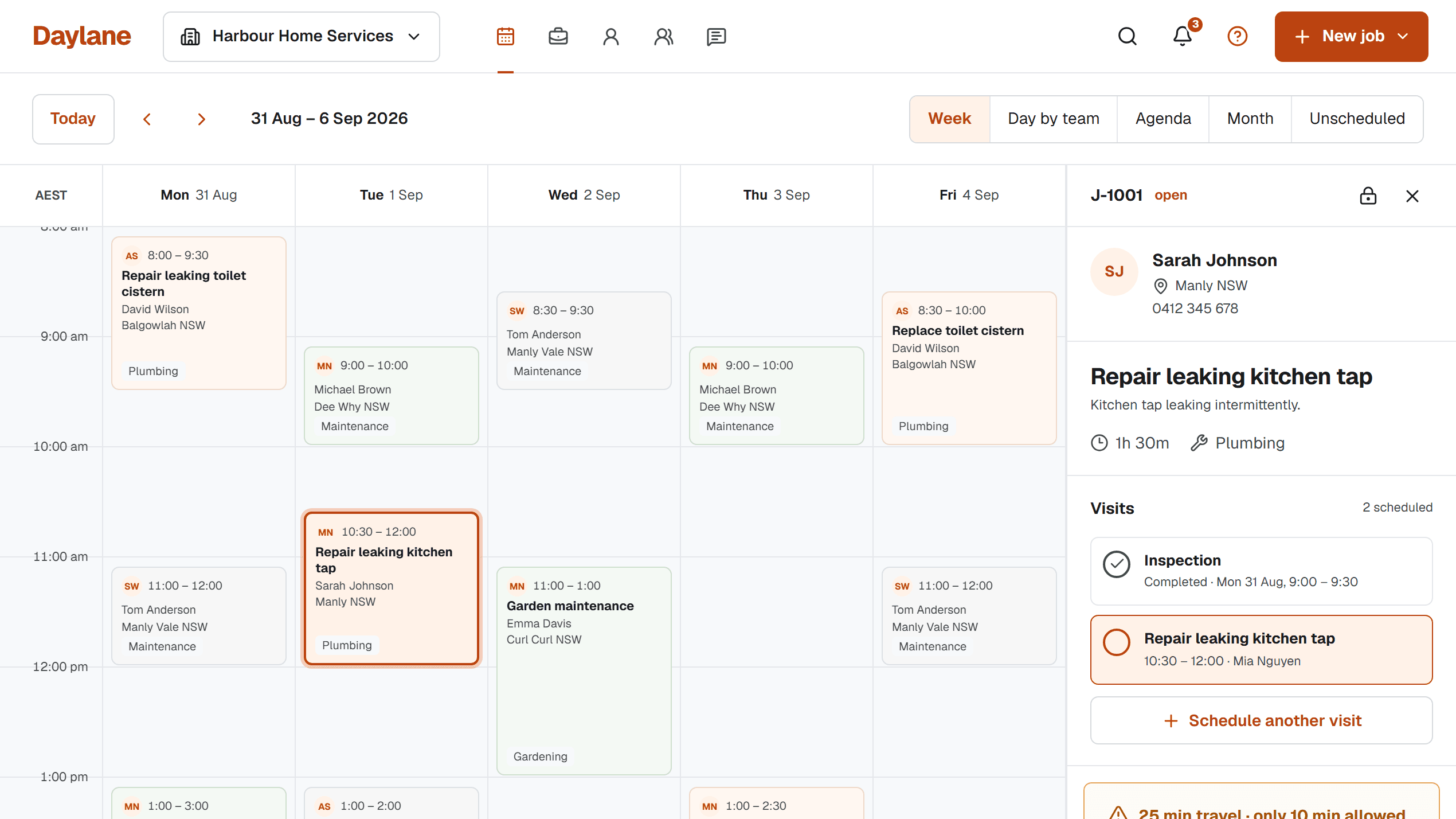
When rain interrupts outdoor work, separate today's attendance decision from the rebooking decision. Some Visits can move to a shorter dry window; others need the site to recover first. Keep each delayed Visit connected to its original Job, record the next review point, and offer new times only after checking the displaced workload.
Review the work and the site
A forecast describes an area, not the condition of an individual property. Confirm what can proceed with the responsible person using your normal site and safety procedures. Scheduling software cannot decide whether the work is safe or suitable to perform.
For planning, group affected work into three lists: can proceed as agreed, needs a new time, and needs another condition check before you can offer a time. That third list stops uncertain work from becoming a chain of broken promises.
Rebuild from available capacity
Suppose four garden Visits are delayed and tomorrow already contains three confirmed services. Moving all four into tomorrow merely transfers the problem. Count the available minutes, travel and any customer access constraints first. Offer the earliest realistic options across several days.
Use flexible work to fill an opening only when the customer has agreed that flexibility. Keep customers with strict access arrangements visible so a convenient route does not override a commitment.
Send a useful update
A weather message should name the affected Visit, state whether attendance is postponed, and say when the customer will hear from you again. If you cannot yet offer a date, give a review time you can honour.
- Example: Hi Alex, today's garden Visit at your property is postponed because the site conditions are unsuitable for the planned work.
- I will review the schedule tomorrow morning and contact you by 11 am with the next available options.
- Please let me know if your access arrangements have changed.
Protect the recurring pattern
A delayed attendance does not automatically mean every future service should move. Decide with the customer whether this is a single exception, a skipped occurrence or a lasting change to the interval. Review the next occurrence to avoid two Visits being booked unusually close together.
At the end of the recovery period, check the delayed list against the calendar. Every affected Job should have a confirmed Visit, an agreed cancellation or a documented next contact. A note saying 'rain' is not enough to tell you what happens next.
Sources and scope
An original operational guide from the Daylane team at Blu Mint Digital. Scenarios, durations and message wording are illustrative planning examples, not customer results or industry benchmarks. Product references were checked against the Daylane implementation on 5 September 2026. Adapt the workflow to your service, customer agreements and working conditions.
How we write and maintain our guides. Free templates and planning tools.