
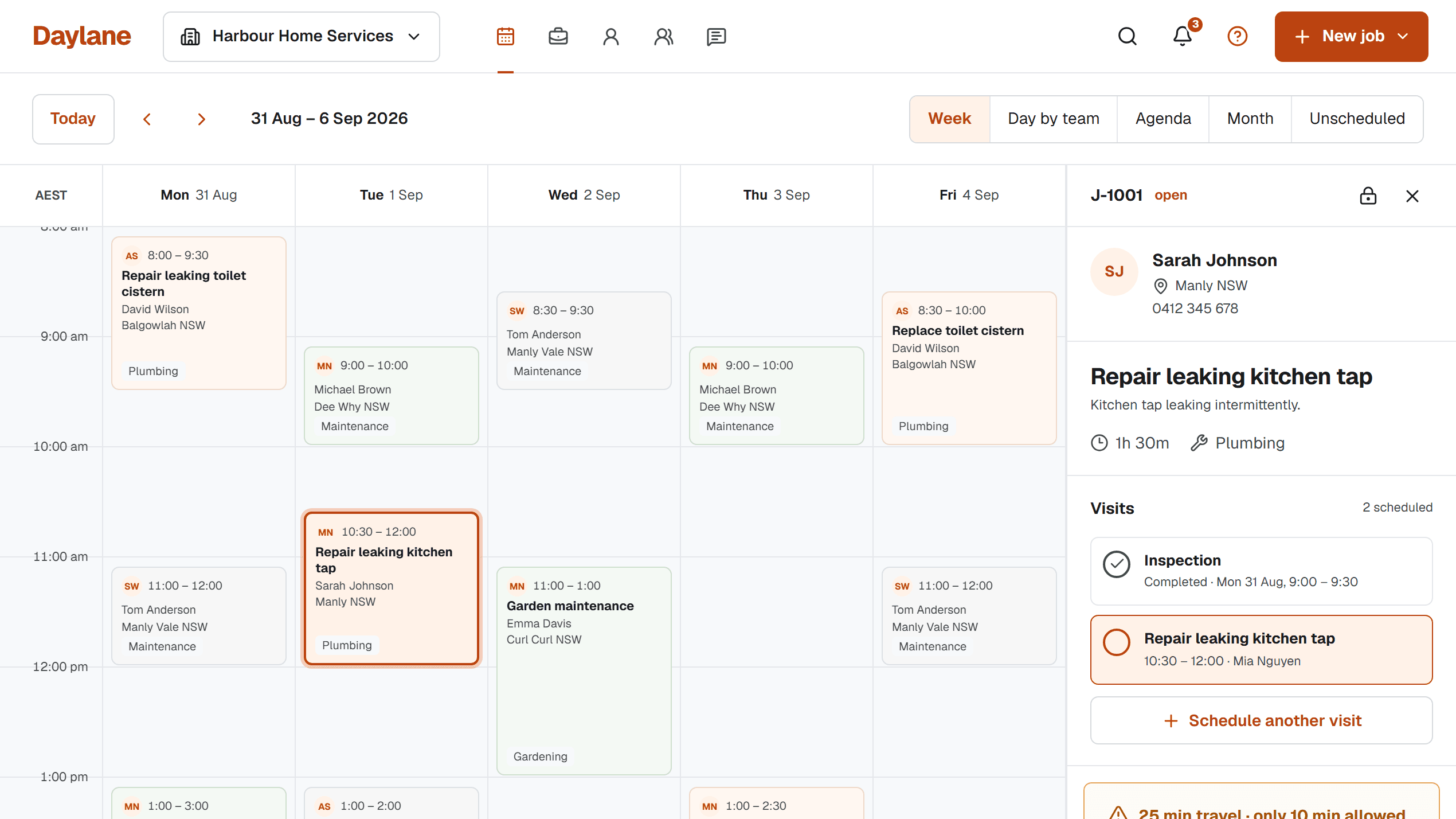
Ask what makes the timing important, then compare the request with the work you can actually deliver. 'Urgent' alone does not establish scope, duration or access. This is a scheduling guide for work within your normal service; it does not provide emergency-response or technical safety advice.
Ask for the scheduling consequence
Useful questions include: What deadline matters? What happens if attendance is later? Is the site accessible now? Is assessment sufficient for the first Visit? Keep a customer's report separate from a diagnosis and stay within the work your business is equipped to assess.
| Request | Timing fact | Next decision |
|---|---|---|
| Office handover clean | Access ends at 15:00 tomorrow | Can the defined work fit before closure? |
| Reported cupboard fault | Customer available all week | Clarify assessment scope and offer an opening |
| Parts-dependent return | Required part has not arrived | Confirm readiness before reserving attendance |
Compare deliverable options
A short assessment may fit where a full repair cannot, but only offer it if its purpose is useful and understood. Do not shorten an unknown service duration simply to make an urgent request fit.
Review existing customer commitments and travel before moving anything. An apparent gap between calendar blocks may already be needed for travel, loading or a fixed-access arrival.
Give an honest next step
Example: 'I can review the issue with you now and check whether an assessment fits tomorrow. I have not confirmed attendance yet.' Once capacity and scope are clear, provide the specific offer or explain why you cannot take the work.
Record the timing constraint and the person responsible for follow-up. If priority changes, explain the new scheduling fact rather than leaving a vague urgent flag to compete with every other request.
Sources and scope
An original operational guide from the Daylane team at Blu Mint Digital. Scenarios, durations and message wording are illustrative planning examples, not customer results or industry benchmarks. Product references were checked against the Daylane implementation on 5 September 2026. Adapt the workflow to your service, customer agreements and working conditions.
How we write and maintain our guides. Free templates and planning tools.