
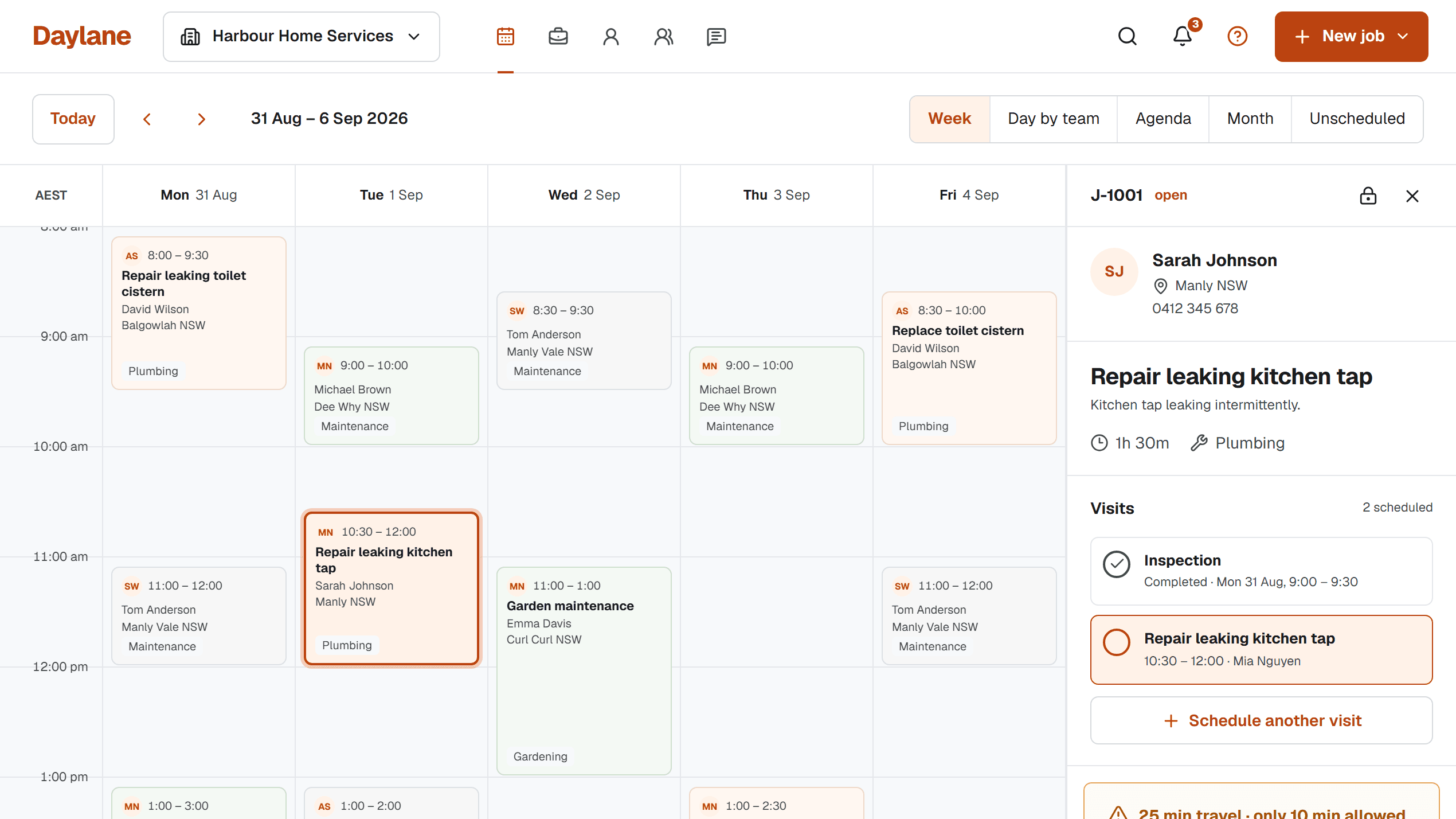
Book an assessment first when the missing information materially affects the work you can offer, the people or materials required, or the time needed on site. Give that attendance a specific purpose and explain what it will and will not settle. Do not promise a completed repair when the only dependable commitment is to assess the request.
Identify the decision the assessment will unlock
The assessment should answer a useful operational question: what work is needed, whether it falls within your service scope, or what must be ready before a work Visit can proceed. A vague inspection with no intended outcome may simply add another attendance.
Ask whether the missing detail could reasonably be established before travelling. A service address, access window or customer-supplied model detail may be clarified remotely. Technical diagnosis and decisions about safe or permitted work belong to the appropriately qualified person.
Use a clear decision sequence
The following sequence is a planning aid, not a technical service procedure. If you cannot estimate a safe and suitable attendance from the available information, do not substitute a larger arbitrary calendar block for the necessary assessment.
- Can you describe the requested work and confirm it is within your service scope? If not, clarify or refer appropriately.
- Are access and the basic attendance requirements known? If not, resolve them before confirming.
- Can the full service be estimated dependably from the information available? If yes, check capacity for that work.
- If not, define what the assessment needs to establish and agree that narrower Visit.
Confirm the purpose with the customer
Suggested wording: 'This first Visit is to assess the reported issue and establish the next step. Completion of the repair at this attendance is not yet confirmed. After the assessment, we can discuss the work, any required items and an available service time.' Adapt it to the actual service and your agreement.
Explain any commercial arrangements separately before the customer accepts. This guide does not establish an inspection fee, quote policy or legal entitlement to charge.
Leave with an actionable next step
Record the outcome, outstanding approval or dependency, and who will contact the customer next. If further work is agreed, keep the return connected to the original Job where it is part of that same piece of work.
A useful note might read: 'Assessment completed; awaiting confirmation of supplied item; coordinator to call Wednesday with scheduling options once readiness is checked.' Marking the assessment attended should not make the unfinished Job disappear from follow-up.
Sources and scope
An original operational guide from the Daylane team at Blu Mint Digital. Scenarios, durations and message wording are illustrative planning examples, not customer results or industry benchmarks. Product references were checked against the Daylane implementation on 5 September 2026. Adapt the workflow to your service, customer agreements and working conditions.
How we write and maintain our guides. Free templates and planning tools.