
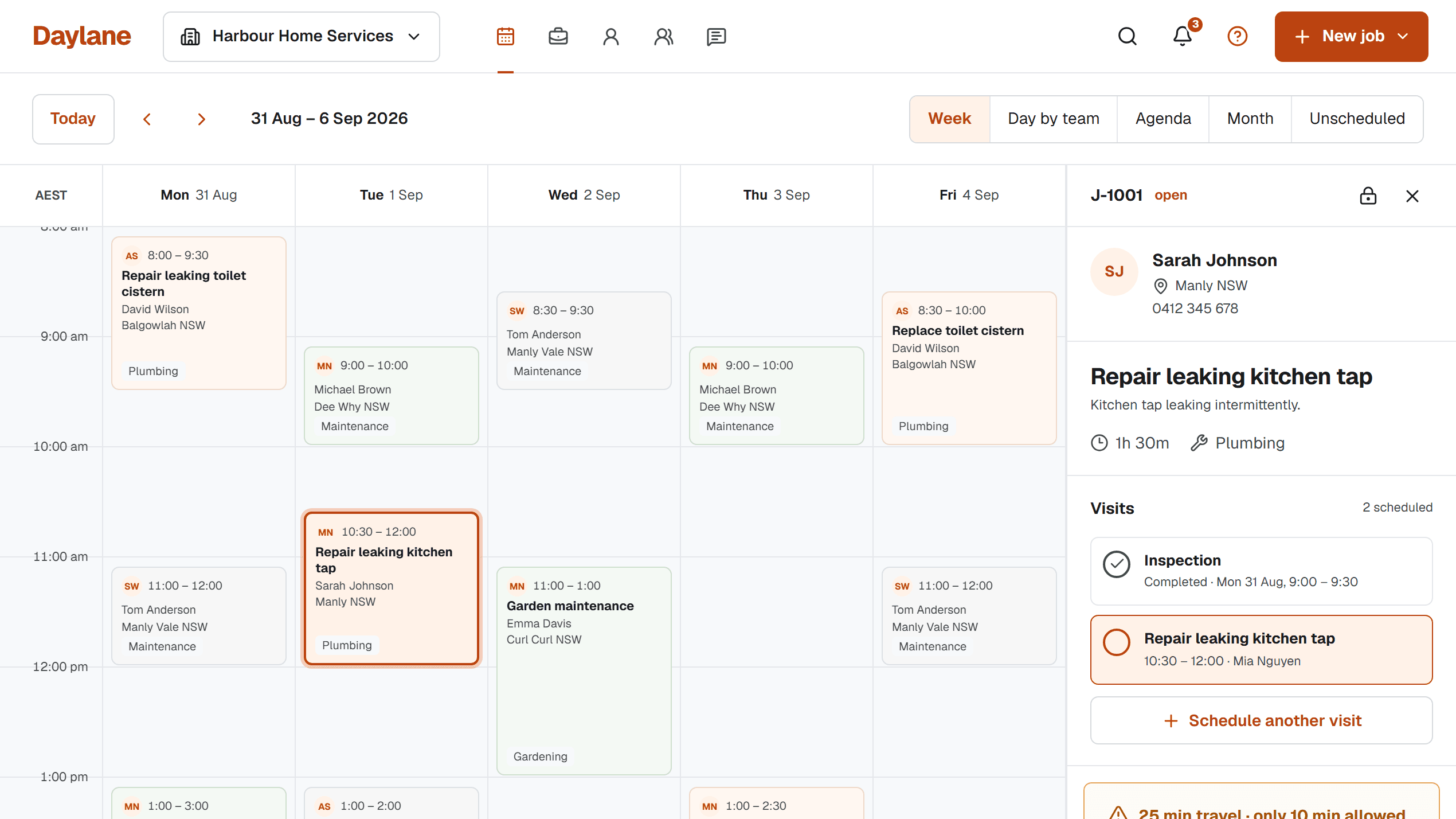
Before a person leaves for a Visit, give them enough information to reach the right site, understand the agreed work and handle a foreseeable blocker. A useful brief answers operational questions directly. It should not require the person attending to reconstruct the booking from several old conversations.
Answer the questions that affect attendance
The fictional brief below is for an assessment, so it clearly limits the purpose of the Visit. Adjust the fields for your service and confirm the details with the customer. Do not include an access credential or a personal detail simply because it happens to be stored elsewhere.
| Question | Briefing detail |
|---|---|
| Where? | North office, 10 Example Street, Exampleville NSW 2000; meet at reception |
| What? | Inspect meeting-room door closer; replacement work is not yet approved |
| When? | Visit scheduled 10:00–11:00; customer arrival window 10:00–10:30 |
| Who provides access? | Sam at reception; contact method verified in the current brief |
| What if blocked? | Contact the scheduler if reception cannot provide access |
| What outcome is needed? | Record the finding and whether a return needs scheduling |
Put essential detail in the view the person will use
Daylane's private Visit detail view includes the Job customer instructions and Visit internal instructions, alongside the scheduled Visit and Customer information. Location access notes are not included in that view. Check the actual assigned person's view, and include any necessary, current Location instruction in the Visit brief.
Keep arrival expectations distinct from reserved service time. In the example, the customer expects arrival between 10:00 and 10:30, while the planned Visit occupies 10:00–11:00. If the arrival arrangement makes the work duration unrealistic, resolve the schedule before attendance.
Review what the customer can see
The public Visit page shows the Job title and customer instructions as well as the relevant Visit details and address. Use that field for customer-readable preparation and expectations. Internal Visit instructions belong in the separate internal field; do not place private commentary into customer instructions for convenience.
Refresh the brief after a material change
Recheck the destination, time, scope and access arrangement after rescheduling or a contact change. Tell the assigned person what changed if they may already have read or printed the earlier brief. Before departure, resolve a missing access contact or unclear approval limit with the scheduler rather than leaving it as an assumption.
After the Visit, record the actual outcome and next action. That result is the starting point for a useful return-Visit brief, especially if someone else will attend.
Sources and scope
An original operational guide from the Daylane team at Blu Mint Digital. Scenarios, durations and message wording are illustrative planning examples, not customer results or industry benchmarks. Product references were checked against the Daylane implementation on 5 September 2026. Adapt the workflow to your service, customer agreements and working conditions.
How we write and maintain our guides. Free templates and planning tools.