
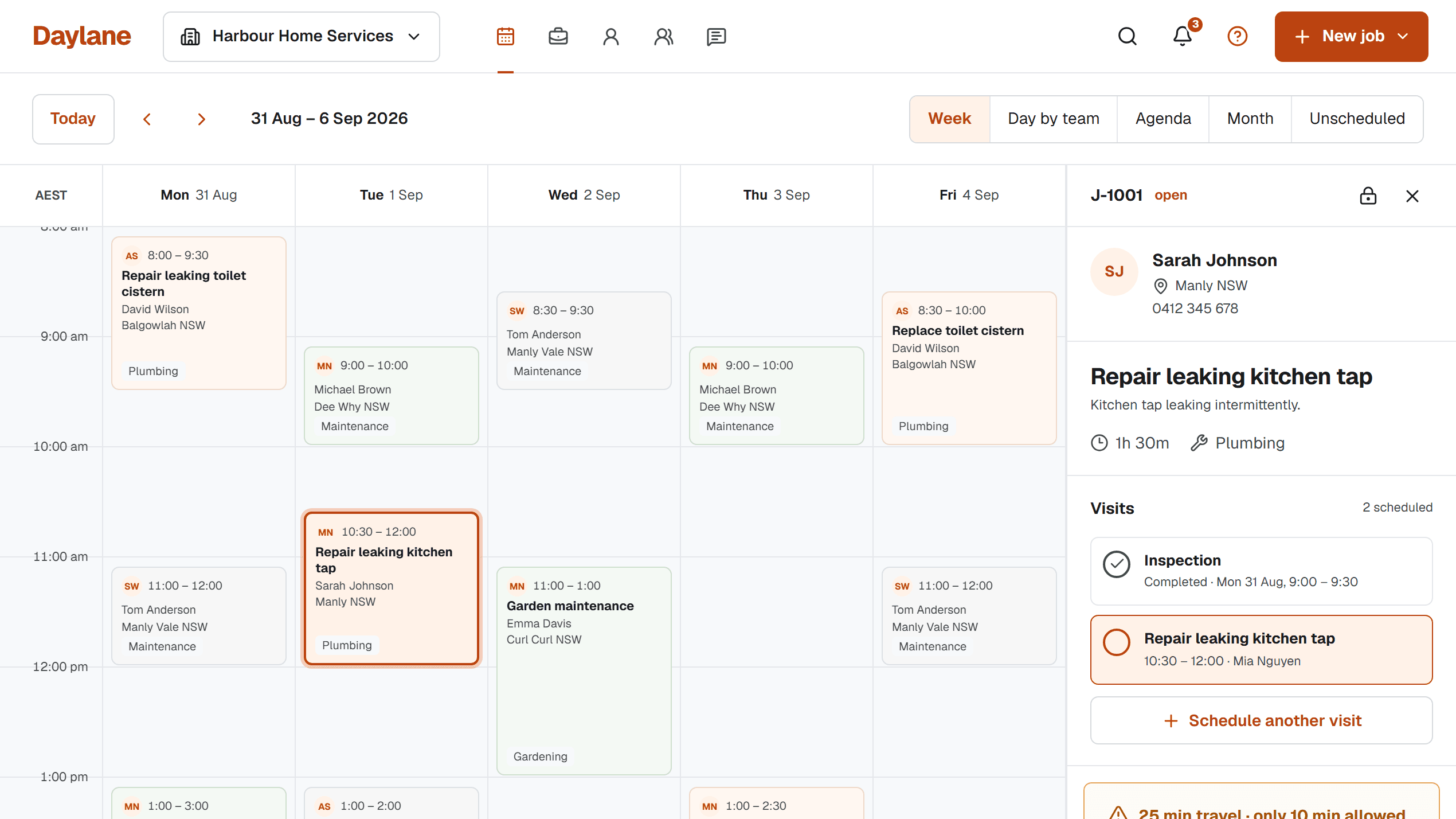
Capture the new report and compare it with the earlier Job's agreed scope and recorded outcome. Do not decide from the timing alone whether it is new work or follow-up to the previous service. Keep the original history understandable while you establish the next scheduling decision.
Record the report without assuming a cause
Ask what the customer is reporting, where it occurs and what they want reviewed. Label it as a customer report until the relevant facts are assessed. This guide does not determine warranty, liability or technical treatment.
| Question | Why it matters |
|---|---|
| Which Customer and service Location? | Links the report to the correct relationship |
| What was the earlier agreed scope? | Shows what the previous Job covered |
| What did the outcome record say? | Separates completed and unresolved work |
| What is newly reported? | Defines the current request |
| What review is needed next? | Creates an actionable assessment or follow-up |
Choose the record structure deliberately
If the request is unrelated work, a separate Job can preserve its own scope and completion decision. If it concerns unresolved work from the earlier service, review the existing record and the supported workflow before deciding how to continue.
Do not overwrite the old completion note to make the new report look as though it was known earlier. Add dated context and retain the distinction between the previous outcome and the current enquiry.
Give a clear next step before promising attendance
Example: 'We have recorded the new report and will review it against the previous Job details. We will then confirm the appropriate next step and any Visit arrangement.' Only promise a time your business can support.
If an assessment is needed, define its purpose and check scope, access and capacity. Keep any separate business or contractual decision outside the calendar-status assumption.
Sources and scope
An original operational guide from the Daylane team at Blu Mint Digital. Scenarios, durations and message wording are illustrative planning examples, not customer results or industry benchmarks. Product references were checked against the Daylane implementation on 5 September 2026. Adapt the workflow to your service, customer agreements and working conditions.
How we write and maintain our guides. Free templates and planning tools.