
Several small tasks can occupy more time than one substantial repair because each needs its own setup, materials and finish. Before offering a handyman Visit, turn the customer's list into an agreed scope and estimate the combined occupied time. Keep additions and unfinished items visible so neither person mistakes attendance for completion.
Turn the list into named outcomes
'A few things around the house' is not a schedulable scope. Ask the customer to identify the tasks and relevant Location details. Record specific requested outcomes, such as adjusting a sticking internal door or replacing an agreed fitting, subject to your qualifications and scope of service.
Distinguish tasks you can accept from work requiring another suitably qualified provider. Do not use a scheduling checklist as evidence that a task is permitted or safe for you to perform.
Estimate the combined Visit
For an illustrative three-task Job, allow 30 minutes, 45 minutes and 40 minutes for the agreed work, plus 25 minutes for setup and pack-up. That is 140 minutes on site. Add the journey before choosing the calendar slot.
If you need to inspect before estimating, offer an assessment Visit with a clear purpose. A vague half-day placeholder can block useful capacity without giving the customer a dependable expectation.
Check materials before confirming the work slot
Record who supplies each required item and who will confirm it is ready. If one task depends on an unavailable item, decide whether to complete the independent work first or arrange a combined Visit later. That decision changes both travel and customer access requirements.
- Agreed tasks and any excluded work.
- Materials required and who supplies them.
- Access contact and arrival window.
- Estimated time including setup and pack-up.
- Next action for anything awaiting a decision.
Record additions and partial completion
When a customer asks for another task on arrival, explain its effect on the available time before agreeing to include it. Update the scope and, where needed, arrange a return without silently delaying the next customer's booking.
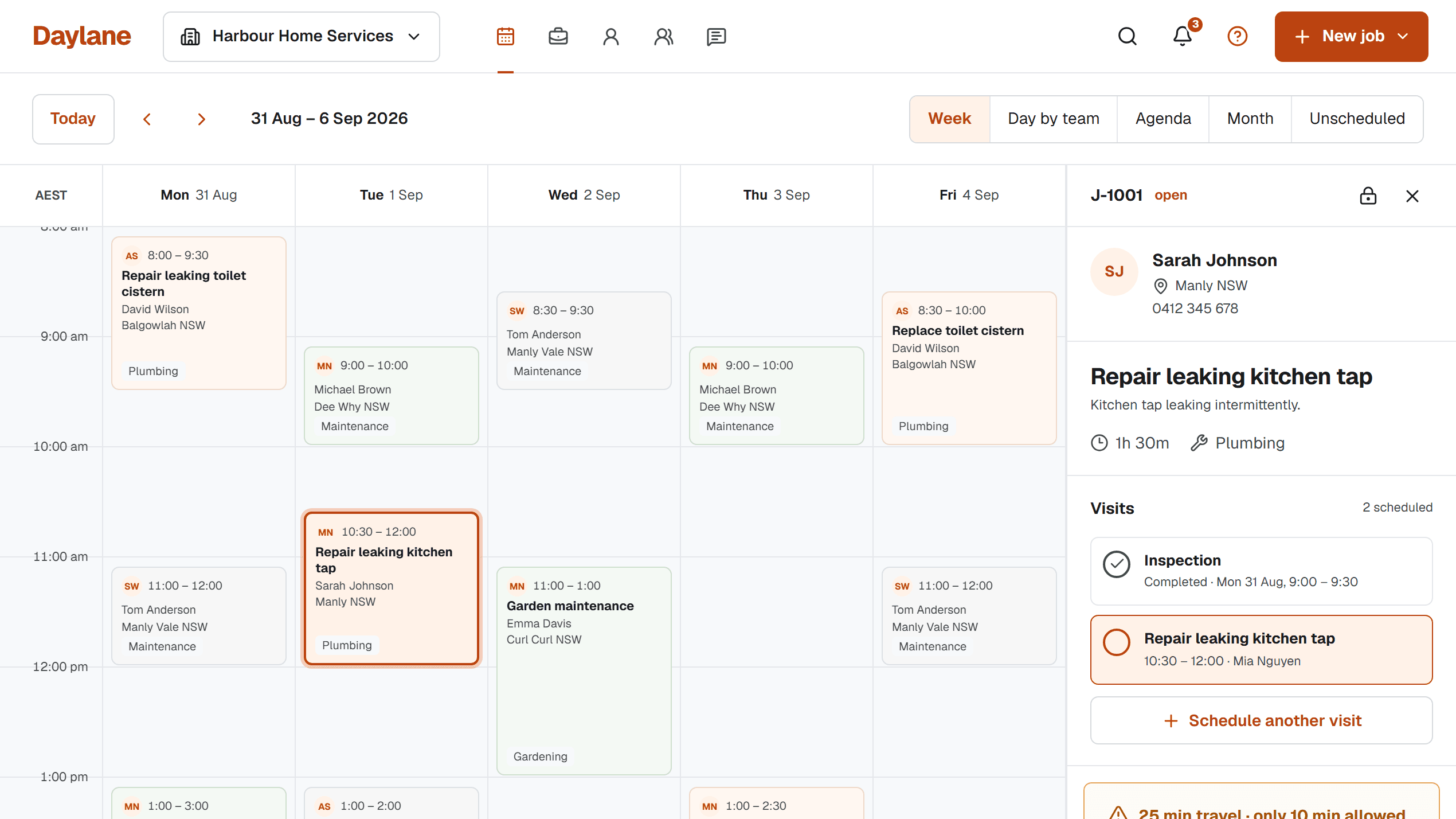
At the end of the Visit, list what was completed and what remains. Keep the Job open if agreed work is outstanding. In Daylane, another Visit can remain connected to the same Job so the return starts with the existing context.
Sources and scope
An original operational guide from the Daylane team at Blu Mint Digital. Scenarios, durations and message wording are illustrative planning examples, not customer results or industry benchmarks. Product references were checked against the Daylane implementation on 5 September 2026. Adapt the workflow to your service, customer agreements and working conditions.
How we write and maintain our guides. Free templates and planning tools.