
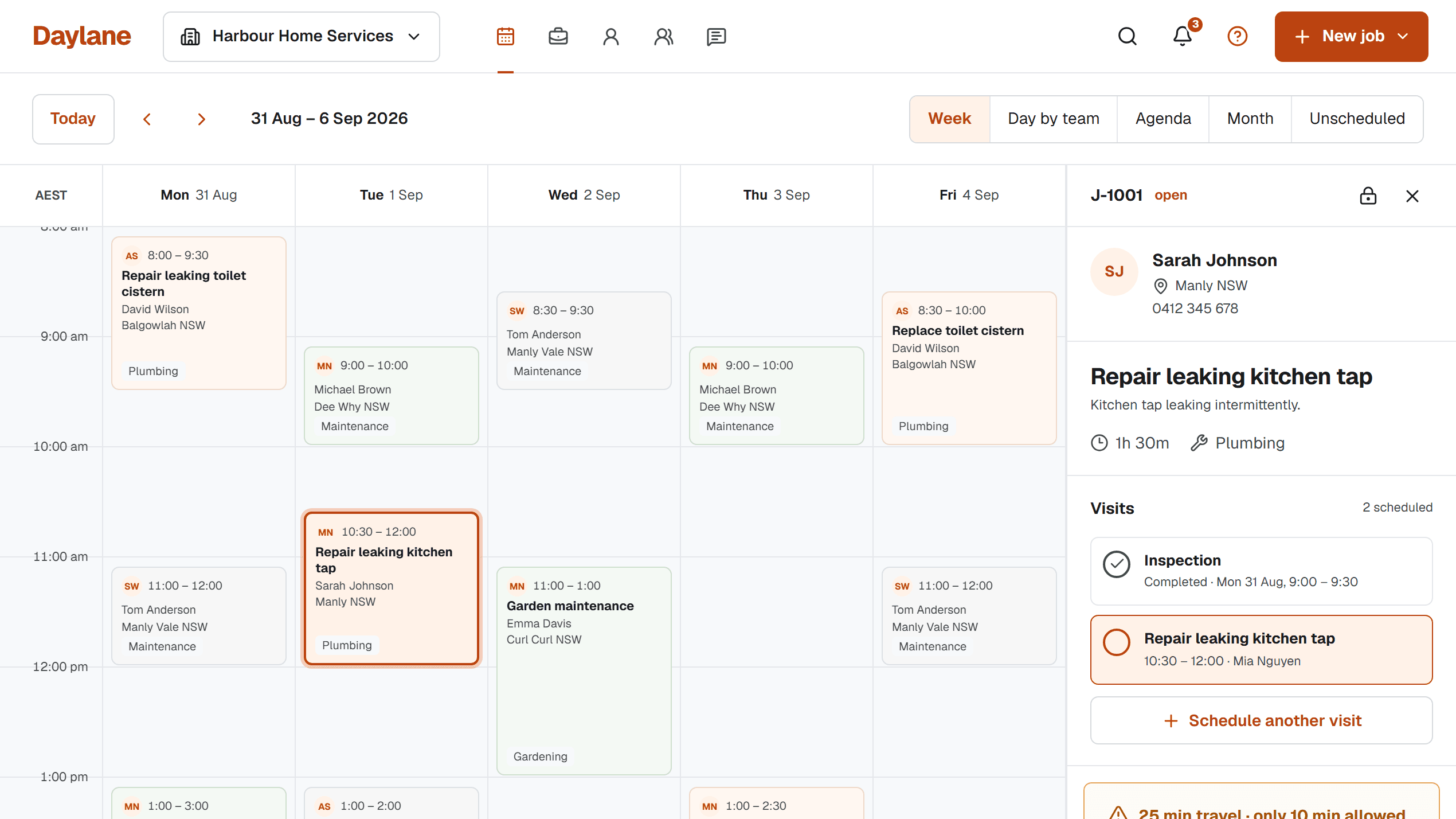
Use an assessment when the work cannot be defined well enough to choose materials and reserve a dependable service duration. Give that attendance a clear purpose, then schedule collection and return work after the relevant decisions are made. Avoid treating an unverified description as a completed inspection.
Define what the assessment must establish
For a small maintenance request, the assessment may clarify the item involved, the agreed work and what must be ready before a return. Keep any technical method within your service's normal professional process; this guide covers the booking sequence.
| Stage | Required outcome | Next scheduling gate |
|---|---|---|
| Assessment Visit | Record the work required and unresolved questions | Customer approval where needed |
| Materials review | Confirm the correct items and availability | Collection plan and readiness |
| Collection | Allow travel, waiting and loading | Return Visit can be delivered |
| Work Visit | Complete the approved scope | Record outcome and remaining action |
Do not reserve collection as invisible time
A supplier stop can consume travel, queueing and loading time before the service begins. Place it in the itinerary and check opening or collection arrangements directly before promising the return.
If material availability is uncertain, give the customer a concrete update time rather than a speculative attendance. An assessment outcome should lead to a next action, not an indefinitely open Job with no owner.
Keep the Job and Visit history understandable
When the return continues the same agreed work, another Visit on the existing Daylane Job can preserve the chain. Record what the assessment established and what the return is intended to do.
If a separate unrelated task is requested during assessment, review its scope and approval independently. Do not let it silently expand the material list or duration of the original return.
Sources and scope
An original operational guide from the Daylane team at Blu Mint Digital. Scenarios, durations and message wording are illustrative planning examples, not customer results or industry benchmarks. Product references were checked against the Daylane implementation on 5 September 2026. Adapt the workflow to your service, customer agreements and working conditions.
How we write and maintain our guides. Free templates and planning tools.