
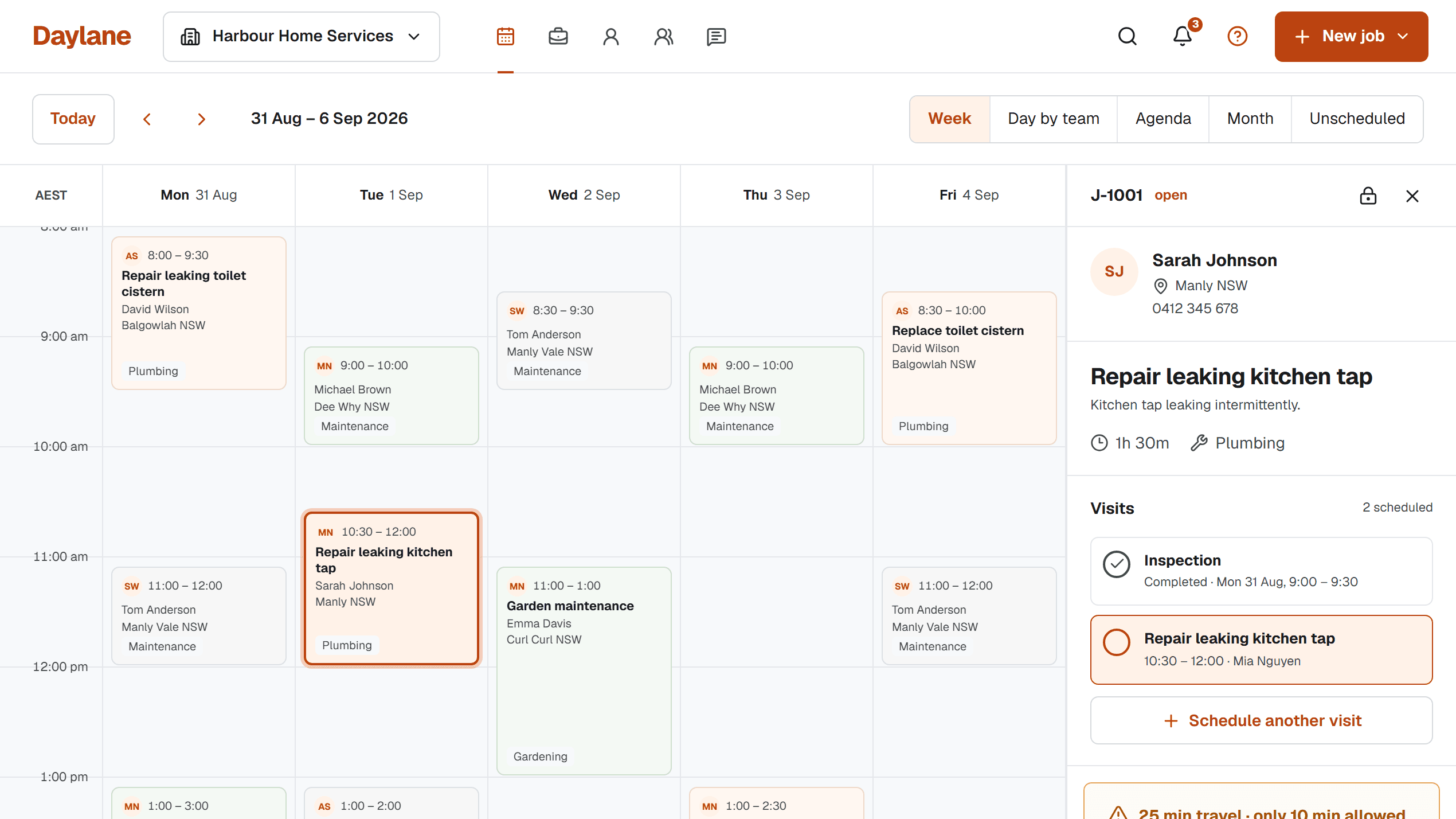
Compare planned and recorded time only when both measure the same activity. Service time, travel and total occupied time answer different questions. Use a small weekly ledger to identify estimates worth reviewing, and keep conclusions limited to the work actually recorded.
Define the measure before calculating differences
The fictional table measures service minutes only. Difference is recorded time minus planned time; percentage difference is that difference divided by planned time. These numbers are illustrative and do not describe Daylane customers.
| Visit | Planned | Recorded | Difference | Difference % |
|---|---|---|---|---|
| A | 60 | 75 | +15 | +25.0% |
| B | 90 | 80 | −10 | −11.1% |
| C | 120 | 180 | +60 | +50.0% |
| Total | 270 | 335 | +65 | +24.1% |
Explain the largest differences
For each difference, ask whether the agreed scope changed, access was delayed, setup was included differently or the original estimate was poor. A 60-minute increase caused by additional approved work should not automatically inflate the estimate for the original task.
Daylane's scheduled duration is a reservation, not a verified timesheet. Progress timestamps also need a clear measurement convention before they are treated as actual service time. Use records appropriate to the measure you intend to review.
Update estimates with their assumptions
Revise a baseline only when you can describe the comparable work and conditions. Keep unusual examples visible as exceptions rather than hiding them in a single average.
Do not average percentage differences to obtain the weekly total. Calculate the total from the summed planned and recorded minutes, as in the example. Label missing or incomplete measurements rather than treating them as zero.
Sources and scope
An original operational guide from the Daylane team at Blu Mint Digital. Scenarios, durations and message wording are illustrative planning examples, not customer results or industry benchmarks. Product references were checked against the Daylane implementation on 5 September 2026. Adapt the workflow to your service, customer agreements and working conditions.
How we write and maintain our guides. Free templates and planning tools.